 October 16, 2026 | Hair Color
Staring in the mirror at brassy, orange, or patchy color you weren’t expecting is its own kind of frustration, especially when you’re not sure if the fix is quick or complicated. That’s exactly what this guide settles: the real difference in toner vs. hair color correction, and which one your hair is actually asking for. Before you book anything, it helps to understand what our hair color correction services actually involve and how they differ from a simple toning appointment, so you spend money once, on the right fix.
Key Takeaways
- A toner adjusts unwanted warmth or brassiness on hair that’s already the correct level, but it won’t fix the wrong color, banding, or patchiness.
- Hair color correction rebuilds hair that’s the wrong level, uneven, or damaged from a bad box-dye or salon visit, often across more than one session.
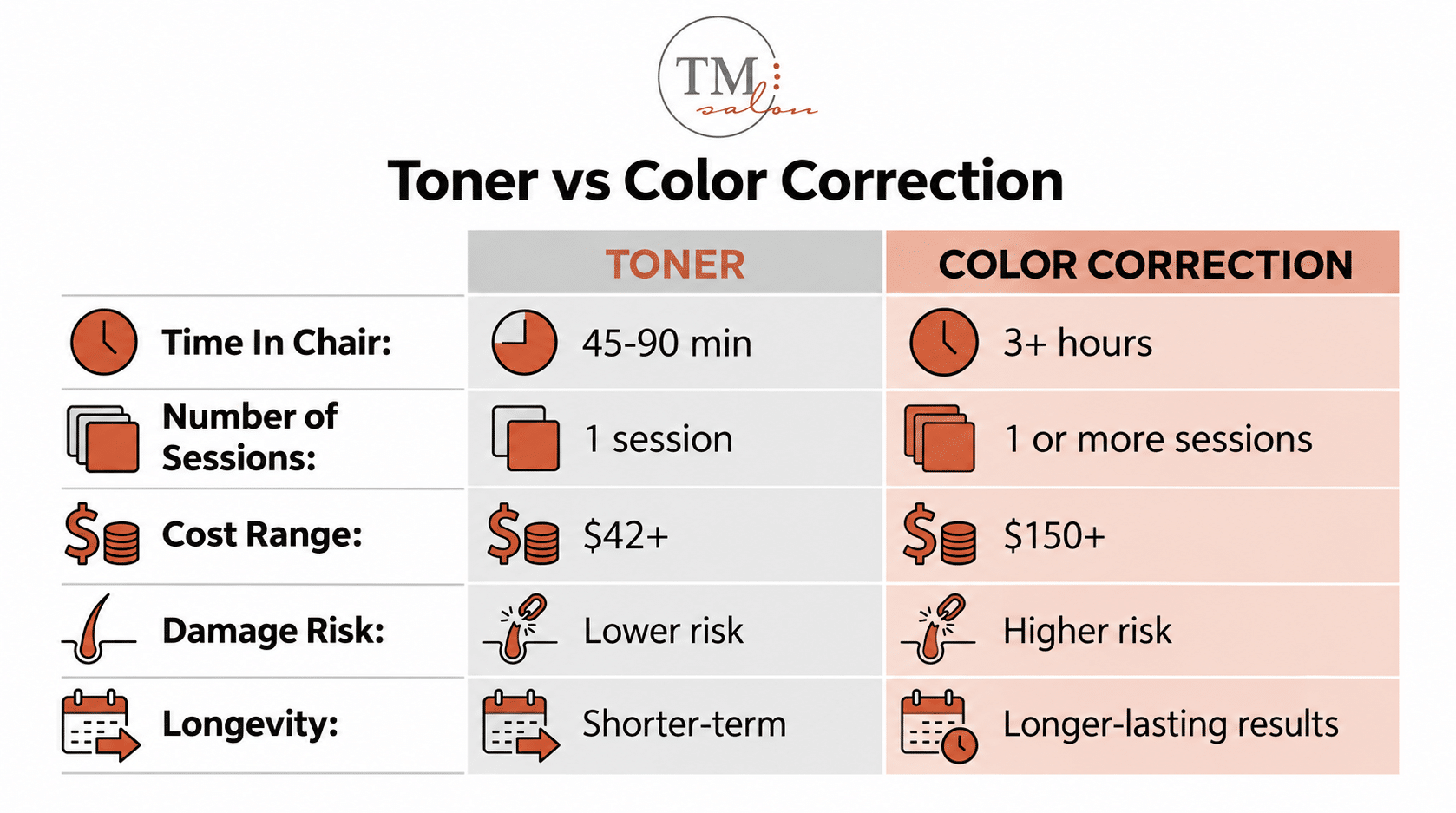
- Toner appointments typically run 45 to 90 minutes, while a full color correction can take 3 or more hours per session and multiple visits.
- Fine or color-treated hair needs a professional consultation before any chemical service, especially if extensions are the next step.
- Trademark Salon specializes in color correction and fine, color-treated hair, with every service starting with a one-on-one consultation.
What Is the Difference Between Toner and Color Correction?
Hair toner adjusts the tone or warmth of hair that’s already at the right level, neutralizing unwanted yellow or orange without changing the underlying color. Color correction fixes hair that’s the wrong level, patchy, or banded, often requiring lightener, filler, and multiple sessions to rebuild the color from the inside out.
The Featured Snippet Answer
That’s the short version. The confusion makes sense, because the two services can look almost identical from the client chair. Both happen under salon lighting. Both change what you see in the mirror. The real difference lives underneath, in what’s actually happening to the hair shaft.
Depositing Tone vs. Fixing Pigment: The Core Distinction
A toner is surface-level work. It deposits pigment onto hair that’s already the right shade, correcting the cast so your blonde reads cool instead of brassy, or your gray reads bright instead of dull. It doesn’t lift anything. It doesn’t shift your level. It refines what’s already there. In practice, a hair toner is just a way to adjust tone without touching the color underneath.
Color correction goes deeper. It often involves lifting hair to a different level, filling in missing pigment, and rebuilding tone from the ground up. Toner is a touch-up. Correction is a rebuild. Here’s the part people miss: toner is frequently the last step of a correction, not a competing alternative to it.
This mix-up causes most of the miscommunication between clients and colorists. Someone asks for a toner when what they actually need is a correction. They book a short appointment. They leave disappointed that the real problem is still there. If you’re not sure which camp you fall into after reading this, that’s a completely normal place to be. It’s also exactly what a quick consultation is for.
What Is Toner and What Does It Actually Fix
Demi-Permanent vs. Semi-Permanent Toner
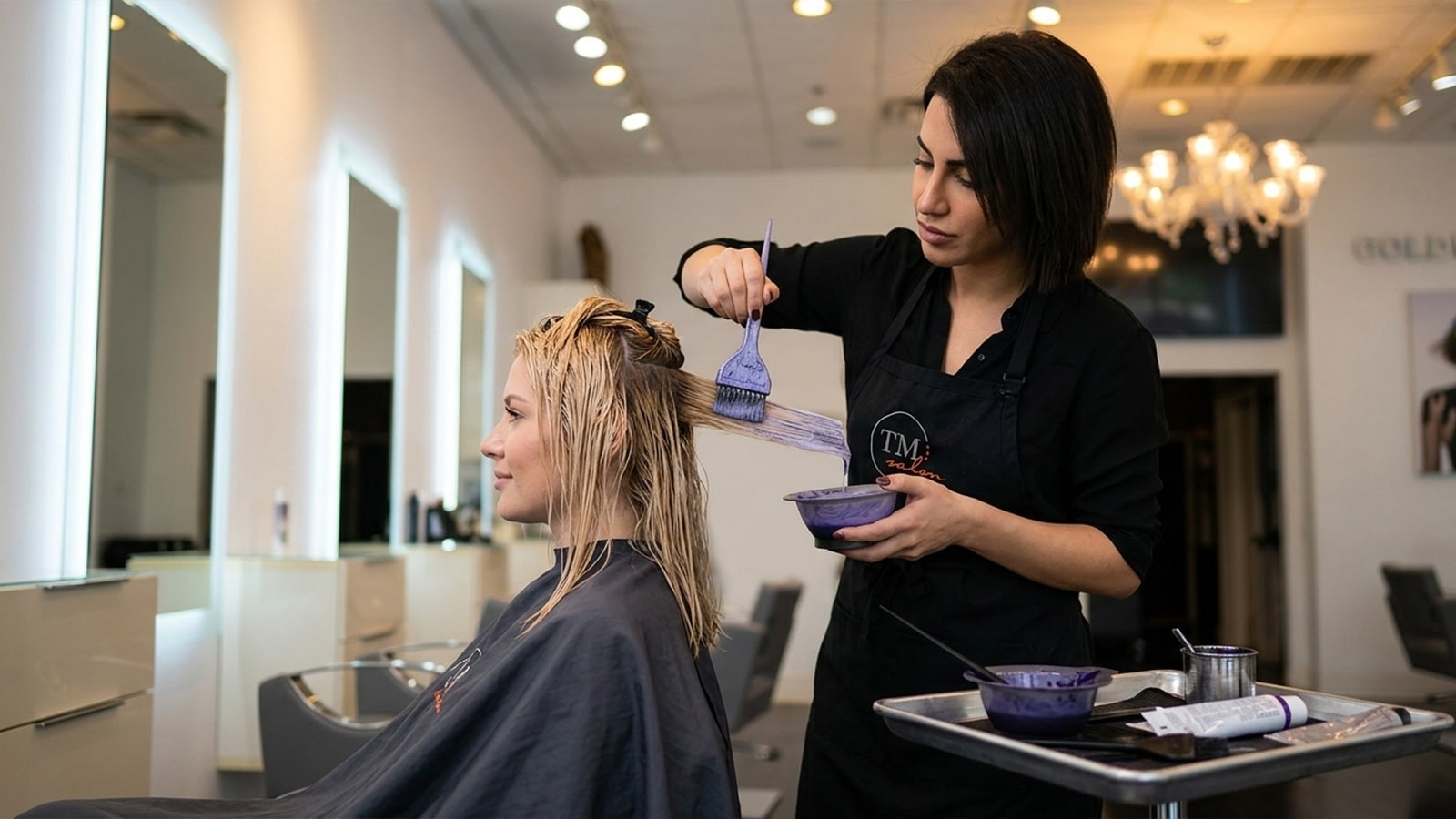
There are two main types of toner, and the distinction matters more than most people think. Demi-permanent toner processes with a low-volume developer and bonds to the hair shaft, lasting four to six weeks. Semi-permanent toner skips the developer entirely and simply coats the hair, fading within a handful of washes. Demi-permanent is the form most salons reach for when correcting brassiness, because it balances longevity with a gentler process, and it’s the most common form of toner requested in-salon for that reason. Professional lines like Wella Color Charm and Redken Shades EQ are demi-permanent formulas favored in salons because they deposit rich, accurate tone with minimal damage. A colorist can fine-tune the formula depending on how warm or cool your hair needs to read.
The Color Wheel: Why Violet and Blue Cancel Brass
Toner relies on color wheel theory. Yellow and orange sit opposite violet and blue on the wheel, so violet-based toner cancels yellow, and blue-based toner cancels orange. That’s why purple shampoo helps maintain cool blonde between salon visits, and why a violet-based blonde toner is the go-to fix for brassy, yellow-leaning hair. It’s chemistry, not magic. And it only works if the level underneath is already correct.
Who a Toner Works Best For
Toner is the right call for post-bleach brassiness, yellow-toned blonde regrowth, or dull, yellowing gray hair. A color toner reads far more subtle than dye, since dyes add pigment broadly while toner makes a finer, more targeted adjustment to existing tone. It can only deposit color, not lift it, so if your actual shade is wrong, patchy, or uneven, toner alone won’t get you there. This matters most on color-treated hair, where previous chemical services already affect how new pigment takes and how your tone reads once the toner sets. It’s especially true for blonde hair, which shows even slight shifts in warmth far more visibly than darker shades, and warm regrowth or sun exposure can quickly pull it back toward brassy tones, making it one of the trickiest hair tone outcomes to predict without a professional eye.
What Is Hair Color Correction and What Does It Actually Fix
Common Causes: Box Dye, Banding, and Bad Salon Visits
Color correction exists for the bigger problems. Box dye applied over previously colored hair often processes unevenly, leaving some sections darker or more saturated than others. Banding happens when regrowth, highlights, and old dye create visible stripes of different tones along the shaft. A bad salon visit can leave you at the wrong level entirely, or just not the direction you asked for. Understanding why professional hair color outperforms at-home box dye can help explain why so many correction cases start at home.
The Level System and Why Lifting Pigment Takes Skill
Professional colorists work within a level system running from 1, which is black, to 10, the lightest blonde. Correcting hair often means lifting it to a higher level first. Bleaching lifts pigment out of the hair shaft using a developer, and that process has to be measured carefully to avoid overprocessing. This is where real skill comes in. Moving hair several levels without breaking it down takes judgment built from training and experience, not a box and a kitchen timer.
Bleach Baths, Foilyage, and Filler in the Correction Process
Correction is rarely a one-step fix. A bleach bath is a gentler, diluted lightening option used when a full bleach application would be too aggressive. Foilyage often comes next, rebuilding soft, dimensional blonde once the base is even. Filler redeposits the pigment that bleaching strips out, so the final color has depth instead of looking flat or hollow. Virgin hair fiber, meaning hair that’s never been chemically treated, tends to process predictably. Previously colored hair does not. That unpredictability is exactly why correction so often takes more than one appointment, and why we’d rather walk you through a realistic timeline up front than surprise you mid-process.
Toner vs. Color Correction: Cost, Time, and Damage Risk Compared
Side-by-Side Comparison Table
| Factor | Toner | Color Correction |
|---|---|---|
| Time in chair | 45 to 90 minutes | 3+ hours per session |
| Number of sessions | Usually 1 | Often 2 to 4 or more sessions |
| Typical cost range | Lower, single-service pricing | Higher, multi-session investment |
| Damage risk | Low to moderate | Moderate to high without bond-building care |
| Longevity | 4 to 6 weeks (demi) or a few washes (semi) | Long-term, with maintenance toning after |
| Best for | Correct level, unwanted warmth or brass | Wrong level, banding, patchiness, bad dye job |
What Drives the Price Difference
The gap comes down to time, product, and the number of visits required. A toner appointment uses one product in a single step. A correction might involve a bleach bath, a filler, a glaze, and a follow-up toning session weeks later, each with its own materials and chair time. Damage risk follows the same logic. The more lifting your hair needs, the more carefully the process has to be managed, which is why fine or color-treated hair should never get a flat-rate quote without an in-person look first. If you want a number before you commit, a quick consultation will get you a far more honest one than anything quoted sight unseen.
How Do I Know If I Need a Toner or a Color Correction?
Signs You Likely Need a Toner
If your base color is right but something about the tone feels off, toner is probably your answer. Quick gut check: is your hair the correct shade but the wrong cast?
- Your blonde or lightened hair looks yellow, orange, or brassy, but the level itself looks right.
- Purple shampoo stops working within a day or two of washing.
- You see visible stripes or bands of different colors along the length of your hair.
- Your box dye or salon color came out a completely different shade than expected.
- Your hair has patchy, uneven saturation from root to end.
- You’ve had extensions, heavy heat styling, or multiple past color services and aren’t sure how your hair will react.
Signs You Likely Need a Color Correction
The last three signs above point toward correction territory, not toner. If your hair’s actual color is wrong, patchy, or banded, no amount of toning fixes the underlying problem. The virgin hair fiber versus previously colored hair distinction matters here too. Hair that’s been dyed, bleached, or chemically treated before tends to behave less predictably. That unpredictability is often the clearest sign a professional should assess it rather than toner being applied blind, and it’s usually the point where true corrective color work becomes necessary rather than a quick fix. If you’re reading this list and still not sure where you land, running through this self-diagnostic is a good reason to bring your hair in rather than guess from the mirror.
What Happens During a Color Consultation (and Why It Matters for Fine Hair)
Assessing Hair Health, Porosity, and Color History
Every color service at our salon starts with a one-on-one conversation before any product touches your hair. A licensed colorist checks your scalp, tests porosity, and asks about color history, including past extensions, keratin treatments, or box dye. Hair that looks similar on the surface can react completely differently underneath, and that difference changes the entire plan.
Protecting Fine or Fragile Hair With Bond-Building Care
For fine or fragile hair, this assessment matters even more. Hair weakened by extensions, heat styling, or prior chemical services needs a gentler approach. We often recommend Olaplex bond-building treatments alongside correction to reduce stress on the hair shaft. This kind of care takes real skill to apply correctly, which is exactly why we don’t recommend attempting correction at home. Booking a proper consultation means you walk in informed and walk out with a plan built around your actual hair, not a guess. There’s no pressure to decide anything on the spot. Most clients just want to know what’s realistic before they commit to a full plan, and that’s a completely fair thing to ask for.
Why Getting the Tone Right Matters Before Extensions
Matching Natural Hair to Extension Wefts
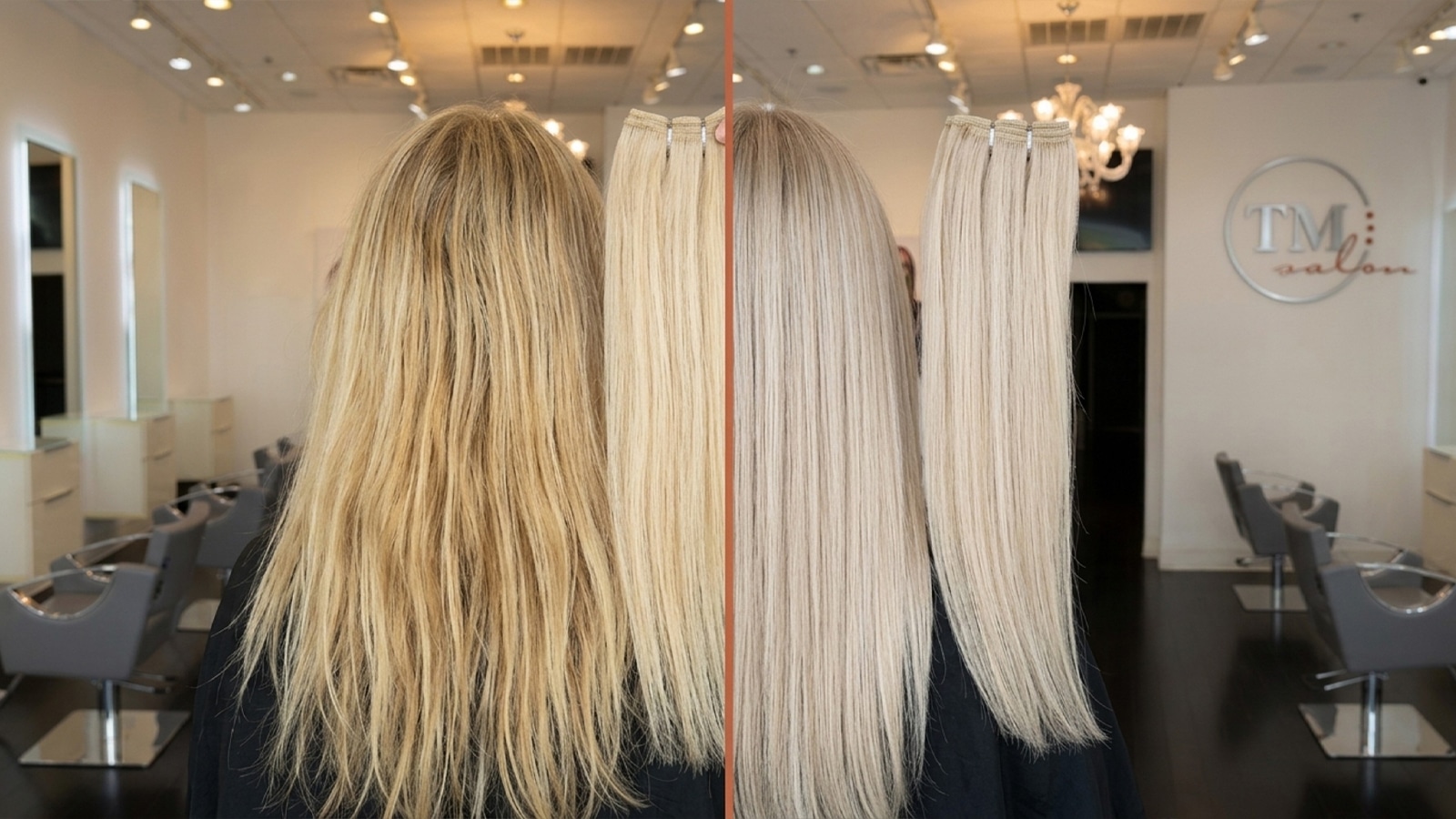
If extensions are part of your plan, getting your color right first isn’t optional. Extension wefts are colored to a specific, consistent shade, and your natural hair needs to land close to that same tone for the blend to look convincing. Brassy or uneven base color makes that match harder, no matter how skilled the extension application is.
Avoiding Brassy Clashing After Installation
We specialize in Natural Beaded Rows, a lightweight, damage-free extension method built for fine and thinning hair. Clients consistently get the best results when color is addressed before installation, not after. A toner refresh or a full correction done ahead of time prevents that awkward clash between warm, brassy natural hair and cooler-toned wefts once everything’s blended. One client came to us with yellowed, over-bleached regrowth from a previous salon, wanting Natural Beaded Rows added for length on her blonde hair. We corrected her base color first over two sessions, then matched her extensions to the refreshed shade. The result held its hair tone evenly from root to weft. If you’re in northwest Houston and extensions are on your radar, book a color consultation on Louetta Road first. Protect the investment before a single weft goes in.
Conclusion
You now have the vocabulary to describe what’s happening in the mirror and a rough sense of which camp your hair falls into, toner or correction. But the final call is always more reliable coming from a colorist who can see your hair in person than from any checklist, especially if it’s fine, fragile, or already carrying extensions or past color work. That’s what the consultation is for, no pressure, no guesswork. Call us at (832) 717-3422 or book a color consultation at Trademark Salon in northwest Houston, and let’s get you the right fix, not just a quick one.
FAQ
Can a toner fix brassy hair without a full color correction?
Yes, a toner can fix brassy hair on its own when the underlying level and color are already correct. If your blonde is the right shade but reads yellow or orange, a toner neutralizes that cast using violet or blue pigment. If there’s also patchiness, banding, or an entirely wrong shade underneath, toner alone won’t resolve it and a correction is likely needed instead.
How do I know if I need a toner or a color correction?
You need a toner if your base color is accurate but the tone looks off, and you need a correction if the actual color is wrong, patchy, or banded. Run through the self-diagnostic signs above as a starting point, then confirm with a colorist, especially if your hair is fine or has a history of color treatments.
How long does hair color correction take compared to toning?
Toning typically takes 45 to 90 minutes in a single visit, while color correction can take 3 or more hours per session and often requires multiple appointments. The exact timing depends on how much lifting or rebuilding your hair needs, which is something only a colorist can judge accurately after seeing your hair in person.
How much does toner cost vs color correction at a salon?
Toner is generally the lower-cost, single-service option, while color correction represents a bigger investment due to the extra time, product, and sessions involved. Typical Houston salon pricing reflects that gap clearly, though an accurate quote always requires an in-person consultation rather than a guess over the phone.
Can you tone hair that has already been color corrected?
Yes, toning is often the final finishing step applied right after a color correction is complete. Once the underlying color has been rebuilt to the correct level, a demi-permanent toner is applied to refine the tone and give the color its finished look. It’s standard to return for maintenance toning every few weeks afterward.
Will toner damage fine or fragile hair?
Demi-permanent and semi-permanent toners are gentler than lightening services, but fine or fragile hair still deserves a professional assessment before any chemical product is applied. We often pair toning or correction with bond-building care like Olaplex to protect hair that’s already been weakened by extensions, heat, or prior color treatments.
How am I going to know I need a color correction?
Visible banding, patchy saturation, or a shade that came out completely different than expected are the clearest signs you’re dealing with a correction rather than a simple tone issue. Attempting to fix these problems at home carries real damage risk, particularly on previously colored or compromised hair, so a professional consultation is the safer next step.