
 June 12, 2026 | Natural Beaded Rows
Can Hair Extensions Help With Postpartum Hair Loss?
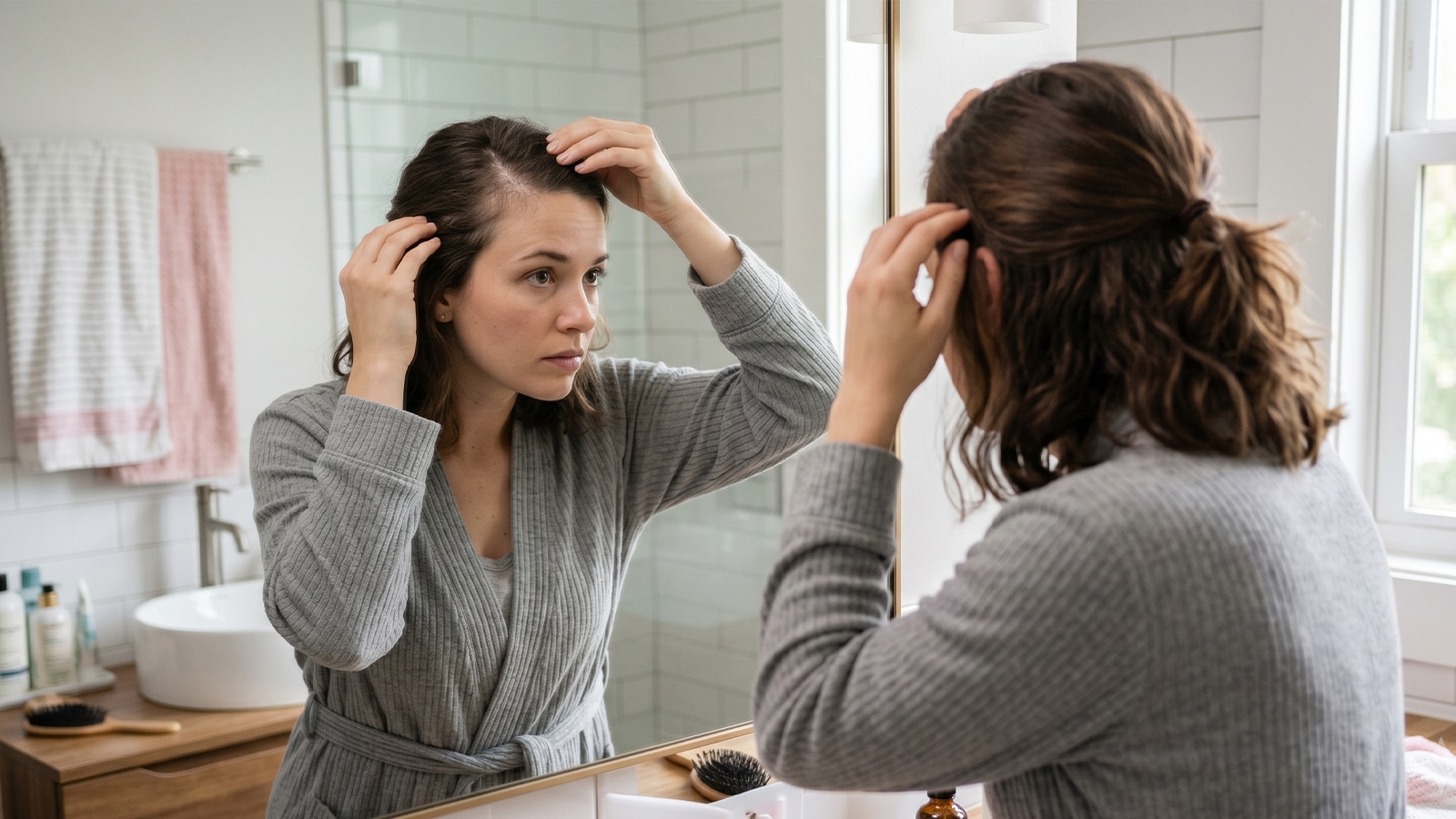
If you’ve been standing in front of the mirror watching more hair than feels normal collect in your hands after every shower, you are not imagining it, and you are not alone.
Thousands of Houston moms go through this exact experience in the months after giving birth. If you’ve started researching hair extensions as a way to regain some confidence while your hair recovers, that instinct makes complete sense. But before you try anything, there is something critical you need to understand: the right extensions, applied at the right time by the right hands, can genuinely help.
The wrong ones, applied without a professional assessment, can turn a temporary hormonal problem into permanent damage.
Key Takeaways
- Postpartum hair shedding is temporary, but the damage caused by the wrong extensions may not be
- DIY extension methods are formulated for healthy hair and can accelerate thinning on postpartum strands
- There is a narrow recovery window where professional intervention makes the biggest difference
- A stylist assessment is the only way to know which extension methods are safe for your hair right now
- Trademark Salon offers a complimentary postpartum hair consultation with zero pressure
What Is Actually Happening to Your Hair After Birth
The hormone shift no one warns you about
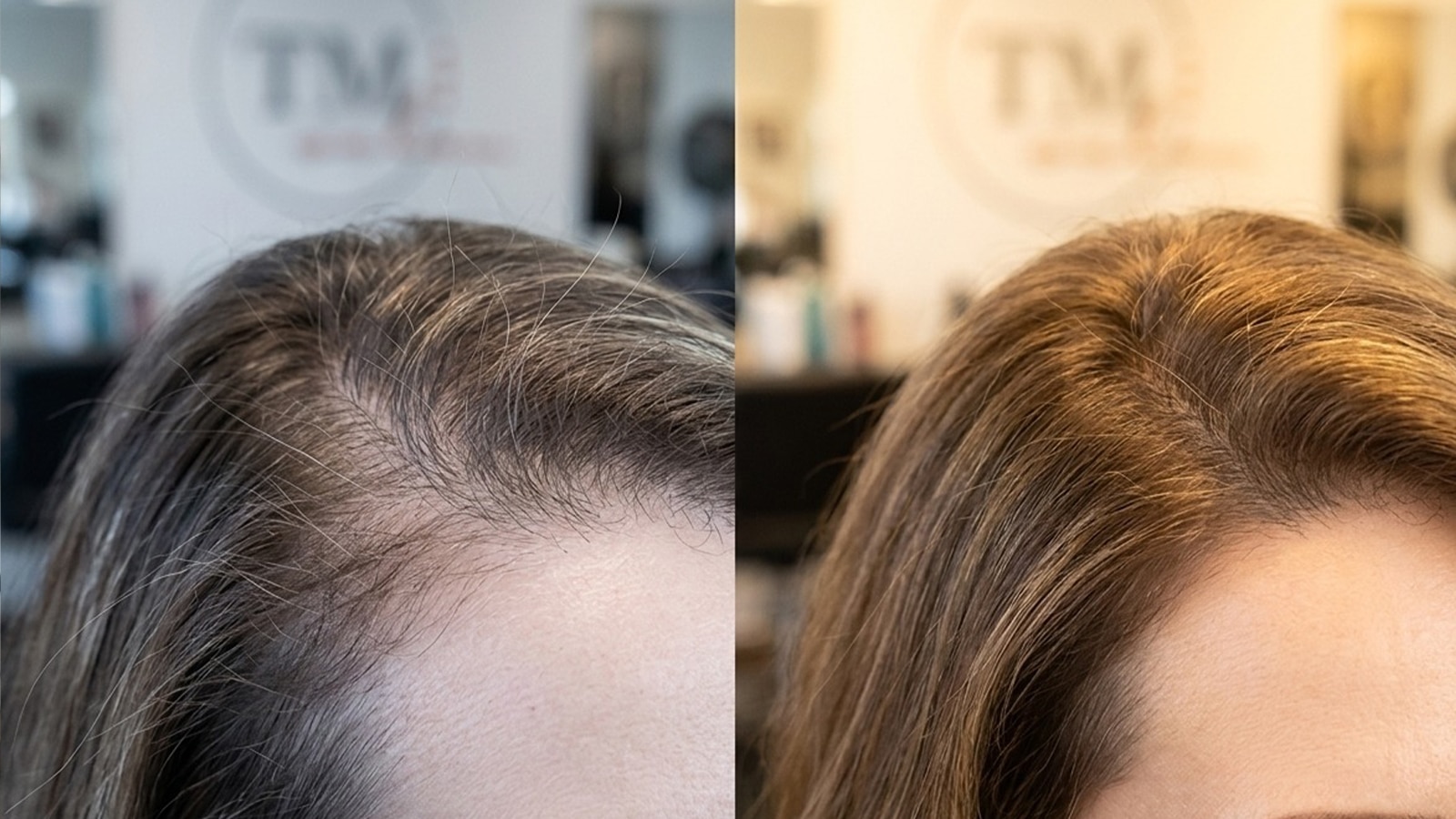
During pregnancy, elevated estrogen levels keep your hair in a prolonged growth phase. You may have noticed your hair looking fuller and thicker than usual. After delivery, estrogen drops sharply, and a large portion of those retained strands enter the shedding phase all at once. This is called telogen effluvium, and for most moms it peaks somewhere between three and six months postpartum.
The shedding is not a sign that something is wrong with your health. It is a delayed hormonal correction. But knowing that does not make it easier to watch happen in real time, especially when it shows up most visibly at the temples and crown where hair thinning is hardest to hide.
Why your hair is more vulnerable right now than it looks
What makes postpartum hair uniquate is not just the volume of shedding. It is the condition of the strands that remain. After months of hormonal shifts, nutritional demands from pregnancy and nursing, and the physical stress of labor, the hair shaft itself is more porous and fragile than it was before. The outer cuticle layer, which is what gives hair its grip and resilience, is compromised. This matters enormously when you start thinking about extensions, because they work by attaching to that cuticle layer.
Can Hair Extensions Actually Help With Postpartum Hair Loss
The honest answer is yes, but with a condition attached: only when the right method is matched to your specific hair at its current stage of recovery.
What extensions can and cannot do
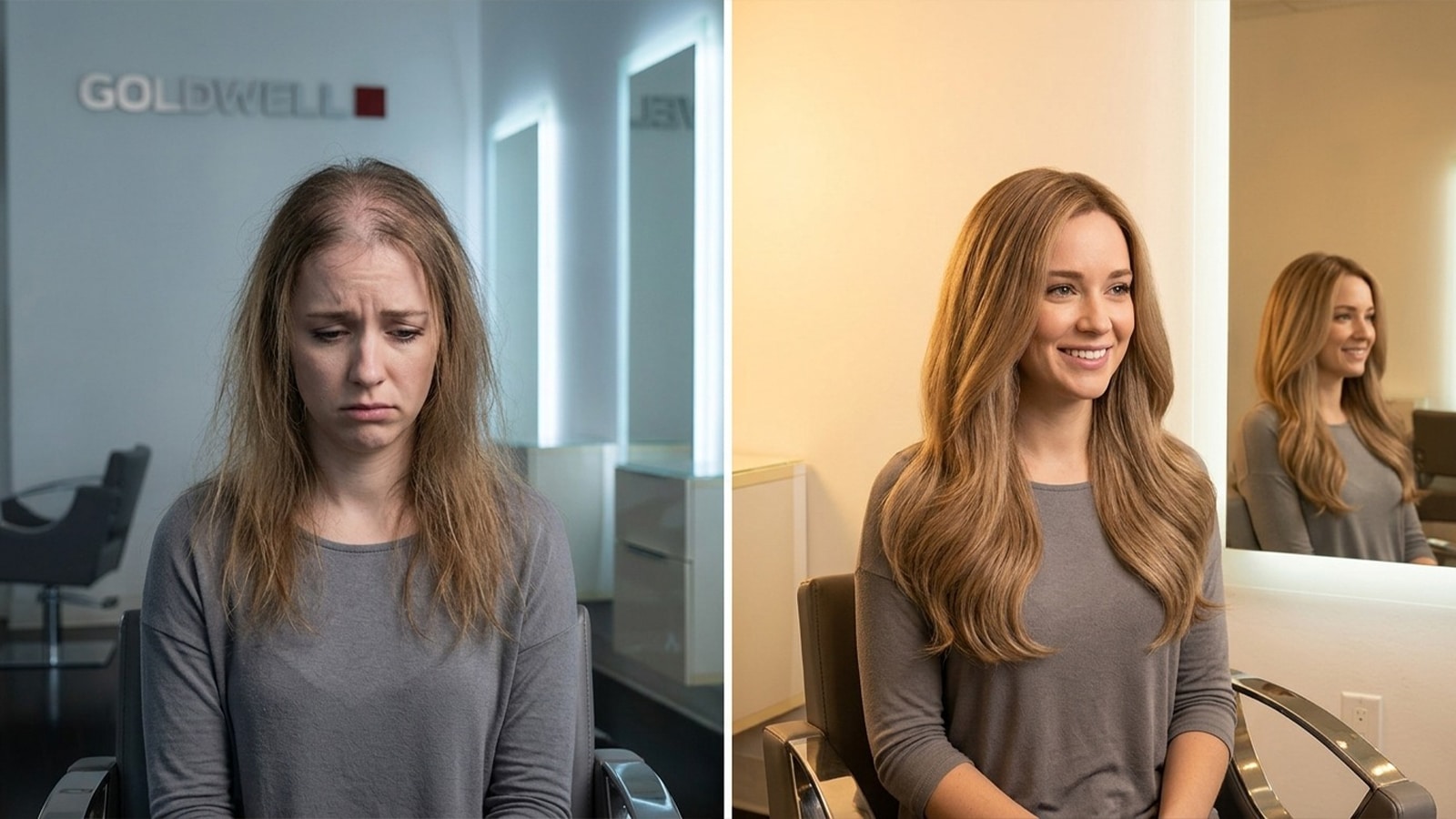
Extensions cannot stop shedding or treat the hormonal cause of postpartum hair loss. What they can do is add visual density, restore the appearance of fullness at the temples and crown, and give you back a sense of normalcy while your hair moves through its natural recovery cycle. For many moms, that confidence restoration is genuinely meaningful. Getting dressed and feeling like yourself again matters, and there is nothing superficial about that.
The part that most online articles leave out
Most content about postpartum hair and extensions is written for a general audience with healthy natural hair. The recommendations that work for someone who simply wants more volume do not translate to hair that is actively shedding and structurally compromised. The methods, the weight of the extensions, the placement zones, and the attachment technique all need to be calibrated differently. A stylist who understands postpartum hair is not using the same approach they would use on any other client.
Why DIY Extensions Are a Serious Risk Right Now
This is where the stakes become very real, and where most moms run into trouble without realizing it until the damage is already done.
Clip-ins on fragile strands
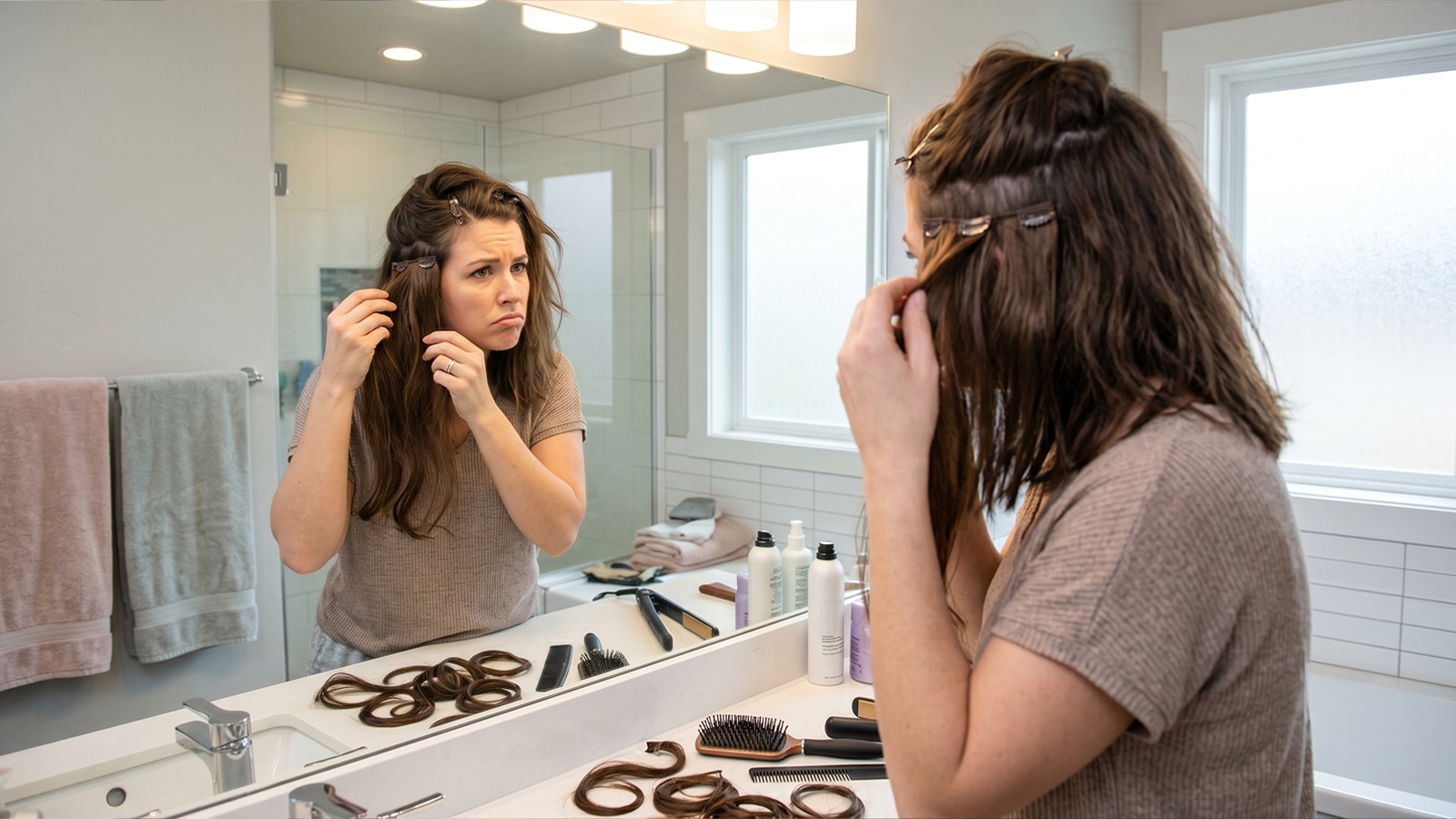
Clip-in hair extensions seem like the safest choice because they are removable. But on postpartum hair, the mechanical pressure of a clip attaching to a fragile strand can snap that strand at or near the root. You may remove the clip at night thinking you have protected your hair, but the repeated attachment and removal cycle causes cumulative breakage. The areas where you most want to add fullness become the areas where you lose the most ground.
Box-store tape-in and glue-in kits
These products like tape-ins and glue-ins are manufactured with healthy hair chemistry in mind. Postpartum hair has a more porous, open cuticle that cannot grip adhesives the same way. In practice, this means the extensions slip sooner than expected, matte against weakened strands, and when they detach, they frequently take surrounding hair with them. What begins as an attempt to look better becomes a visible worsening of the problem.
The shedding zone problem
This is the risk most people do not know to think about. Your scalp is not shedding uniformly. Some areas are actively losing hair right now. Others have already begun to stabilize and regrow. Without a professional assessment, you have no way to distinguish between those zones. Applying extension weight to an area that is still in active shedding places mechanical stress on follicles that are already under hormonal strain. In a worst-case scenario, that stress can cause follicle damage that reduces your final regrowth density permanently.
Online tutorials are built for people with full, healthy hair. Following them on postpartum hair is like using a renovation guide written for new construction on a house with a cracked foundation. The instructions are not wrong for their intended situation. They are just not built for yours.
Traction alopecia: the risk that does not reverse itself
Poorly fitted extensions on thinning postpartum hair create traction points at the scalp. When that tension is sustained, it can cause traction alopecia, a form of hair loss caused by mechanical pulling on the follicle. Unlike hormonal shedding, traction alopecia is not guaranteed to reverse on its own. Research suggests that irreversible follicle changes can begin in as little as six to eight weeks of improper wear. What starts as a temporary confidence solution can become a permanent hair loss condition.
If you are feeling uncertain about any of this, that uncertainty is telling you something useful. It is worth a conversation before you try anything at home. Trademark Salon can be reached at (832) 717-3422 if you want to talk through your situation before committing to anything.
The Window That Matters More Than Most Moms Realize
Postpartum hair has a recovery window. The follicles that are resting right now are primed to re-enter the growth phase, and for most moms, regrowth begins to stabilize somewhere between nine and twelve months postpartum. That window is the most important variable in this entire conversation.
Why timing changes everything
The decisions you make about extensions during this window either work with your hair’s recovery or against it. Professional application during the right phase of shedding can protect existing strands, add density where it is needed, and avoid the zones where active shedding is still occurring. Every week of applying the wrong method to weakened hair risks converting a temporary hormonal problem into a permanent structural one. And every week of waiting without any professional guidance means continuing to lose confidence during the period when the right intervention would have made the most difference.
This is not about pressure, it is about timing
No one should feel rushed into anything. But understanding that postpartum hair loss has a biological timeline is genuinely useful information. The sooner you get an honest, professional assessment of where your hair is in that timeline, the more options you have available to you.
What a Professional Assessment Actually Looks Like
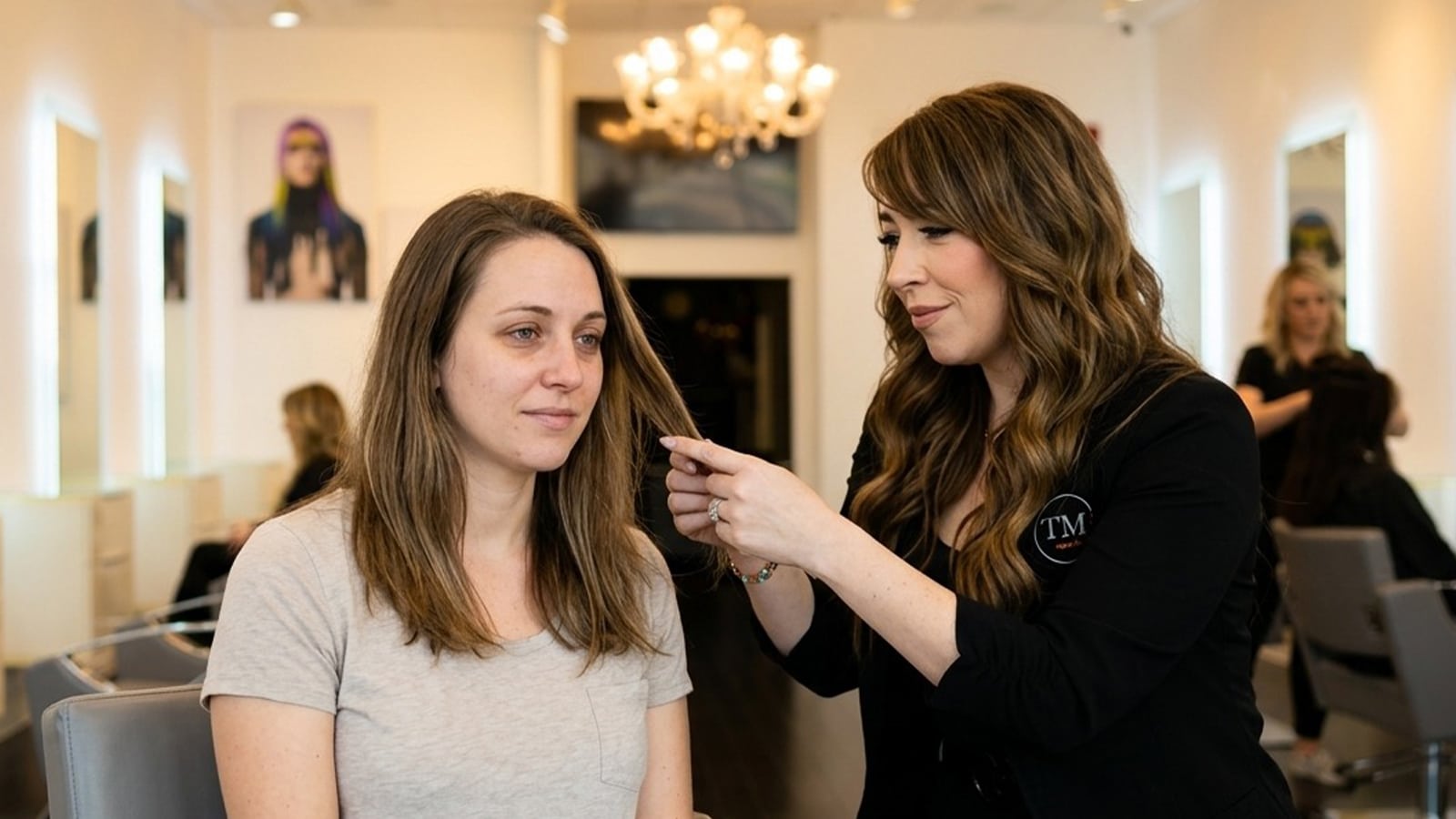
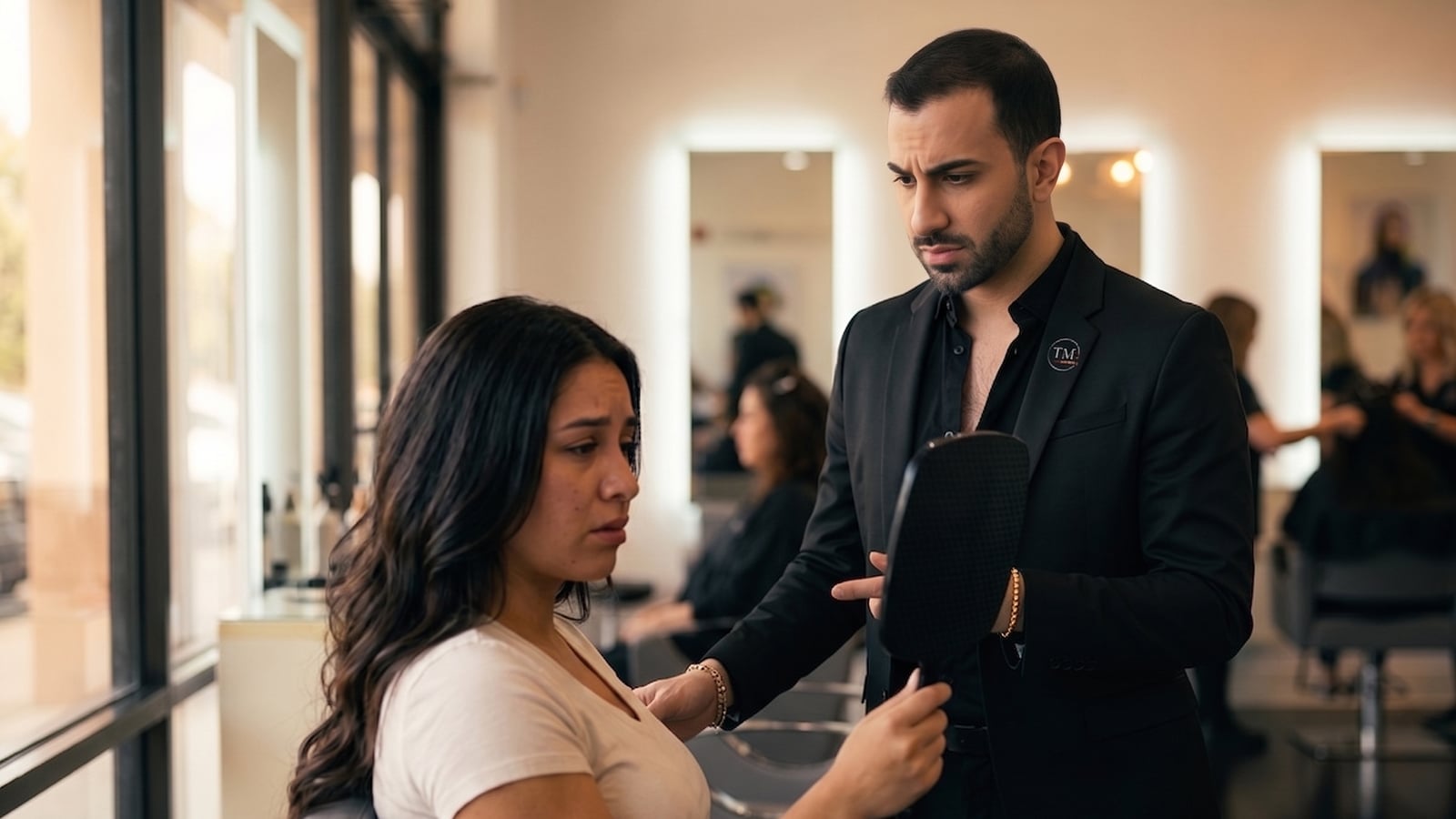
A postpartum hair consultation is not a sales appointment. It is a conversation with a stylist who can look at your actual hair, assess which areas are actively shedding versus stabilizing, and tell you honestly which extension methods are appropriate for your hair right now and which ones to avoid.
What gets evaluated
A qualified stylist will look at the overall density and texture of your hair, the condition of the hair shaft and cuticle, the specific areas of thinning, and any visible signs of scalp stress. Based on that assessment, they can recommend an extension method that adds fullness without placing mechanical strain on vulnerable zones. At Trademark Salon, we specialized in Natural Beaded Row weft extensions. They can also tell you if your hair is not yet at a stage where any extension is appropriate and what you should be doing in the meantime.
What you leave with
You leave with a clear picture of where your hair actually is, what is safe to try right now, and what the realistic path forward looks like. Understanding whether do hair extensions damage your hair is even a concern for your specific situation is exactly the kind of question a professional consultation is designed to answer. That kind of clarity has real value, especially when you have been trying to make this decision based on general advice that was not written for your situation.
Conclusion
You now understand why postpartum hair sits in a completely different category than healthy hair, and why extension methods that work for everyone else can cause real, lasting harm during this specific window. The good news is that extensions for postpartum hair loss absolutely can help, when they are chosen correctly, applied professionally, and matched to where your hair actually is today.
The safest next step is not another search. It is one conversation with a stylist who can see your hair, assess your shedding stage, and give you an honest plan with no pressure attached.
Call Trademark Salon in Houston at (832) 717-3422 today for a complimentary postpartum hair consultation. A stylist will assess your current shedding stage, show you which extension methods are safe for your hair right now, and give you a clear plan to look and feel like yourself again. No guessing. No pressure. Just answers built specifically for your hair.
Frequently Asked Questions
How long does postpartum hair loss last?
Most women experience peak shedding between three and six months after delivery. For the majority of women, shedding begins to slow by nine to twelve months postpartum and regrowth follows. The timeline varies depending on individual hormonal recovery, nutrition, and stress levels. If shedding continues past twelve months without slowing, that is worth discussing with both a physician and a stylist.
Are there any extension methods that are always safe for postpartum hair?
There is no universal answer, because safety depends on the current condition of your specific hair, which zones are still actively shedding, and how compromised the cuticle structure is. Lighter-weight, lower-tension methods tend to carry less risk in general, but even those need to be placed correctly and in the right zones. The only way to know what is safe for your hair is to have it assessed by someone who can see it.
What is traction alopecia and should I be worried about it?
Traction alopecia is hair loss caused by sustained mechanical tension on the follicle, typically from tight hairstyles, improper extensions, or repeated pulling. Unlike hormonal postpartum shedding, it does not always reverse on its own. Early-stage traction alopecia can resolve with time and reduced tension, but in cases where the follicle has been under stress for an extended period, the damage can be permanent. It is one of the primary reasons professional assessment matters before applying any extensions to postpartum hair.
Can I use clip-in extensions to add volume while I wait for regrowth?
Clip-ins are often assumed to be the safest option because they are temporary, but on postpartum hair they carry real risk. The mechanical pressure from clips on fragile, shedding strands can cause breakage at the root. If you are considering clip-ins, the weight, placement, and condition of your hair all need to be evaluated first. A stylist can tell you whether clip-ins are appropriate for your hair right now and how to use them in a way that does not accelerate thinning.
What should I bring to a postpartum hair consultation?
There is nothing specific you need to bring. Coming with your hair in its natural, unwashed or lightly washed state can help a stylist see its true texture and condition. It is helpful to be able to describe when shedding started, which areas seem most affected, and whether you have already tried any extension methods or hair products. The more context you can share, the more useful the assessment will be.