
 April 10, 2026 | Hair Color
A bad balayage is one of the more frustrating outcomes in hair color — not because it’s hard to fix, but because it usually happens after you did everything right. You brought the photo. You communicated clearly. You spent real money and real time. If you’re now staring at something brassy, patchy, or nothing like what you asked for, here’s the short answer: most bad balayage results can be corrected without starting over. What the fix looks like depends entirely on what went wrong.
Key Takeaways
- Most bad balayage results are correctable — the path forward depends on what went wrong, not whether a fix exists
- Brassy or yellow tones are often the easiest issues to address, sometimes without returning to the salon
- Patchy placement or over-bleached results require a professional color correction, not a DIY solution
- Houston’s hard water can accelerate brassiness even after a technically solid balayage
- Going back to the same stylist is not always the right call — a correction specialist may produce a better outcome
What Does Bad Balayage Actually Look Like?
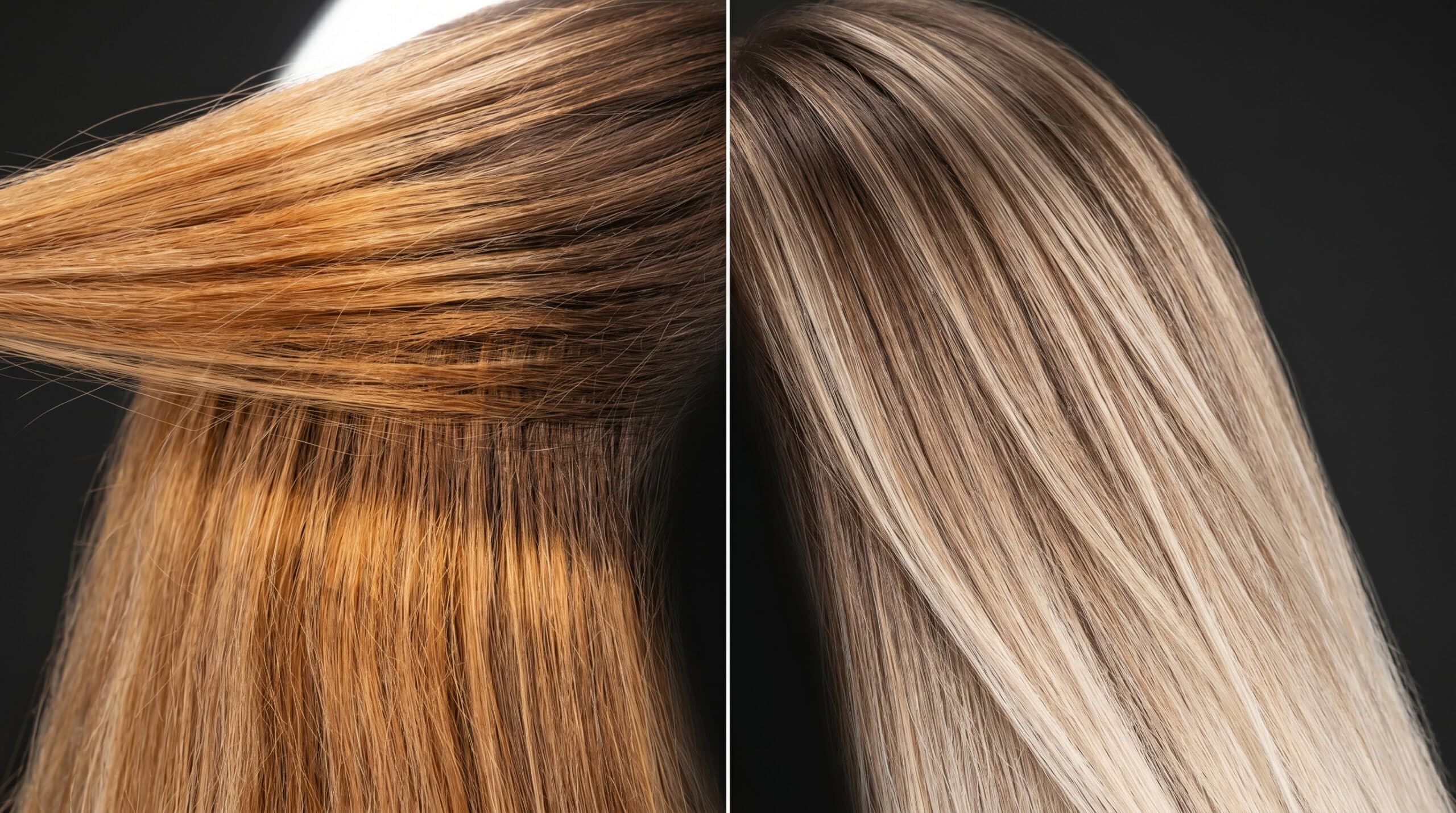
Good balayage looks like dimension your hair grew in naturally — soft transitions, no harsh lines, warmth where the light hits. When it goes wrong, the failure tends to show up in recognizable ways.
Some people walk out brassy, with orange, copper, or yellow tones that were never part of the plan. Others end up with patchy coverage where certain sections are dramatically lighter than the rest, or a striped result that reads as traditional foil highlights rather than anything hand-painted. Some hair gets over-processed to the point where it loses depth entirely and looks flat and bleached-out.
There’s a real difference between “I don’t love this style” and “this was technically done wrong.” Both are valid. They lead to different solutions.
| What You See | What It Means | Likely Fix |
|---|---|---|
| Brassy or orange tones | Under-toned or oxidized | Toner or color gloss |
| Patchy, uneven coverage | Poor placement technique | Color correction |
| Harsh lines, no blend | Foil technique used, not freehand | Corrective blending service |
| Too blonde, no dimension | Over-processed with bleach | Color added back in with dye |
| Flat, ashy, no warmth | Over-toned | Re-gloss or glaze |
Why Your Balayage Hair Color Went Wrong
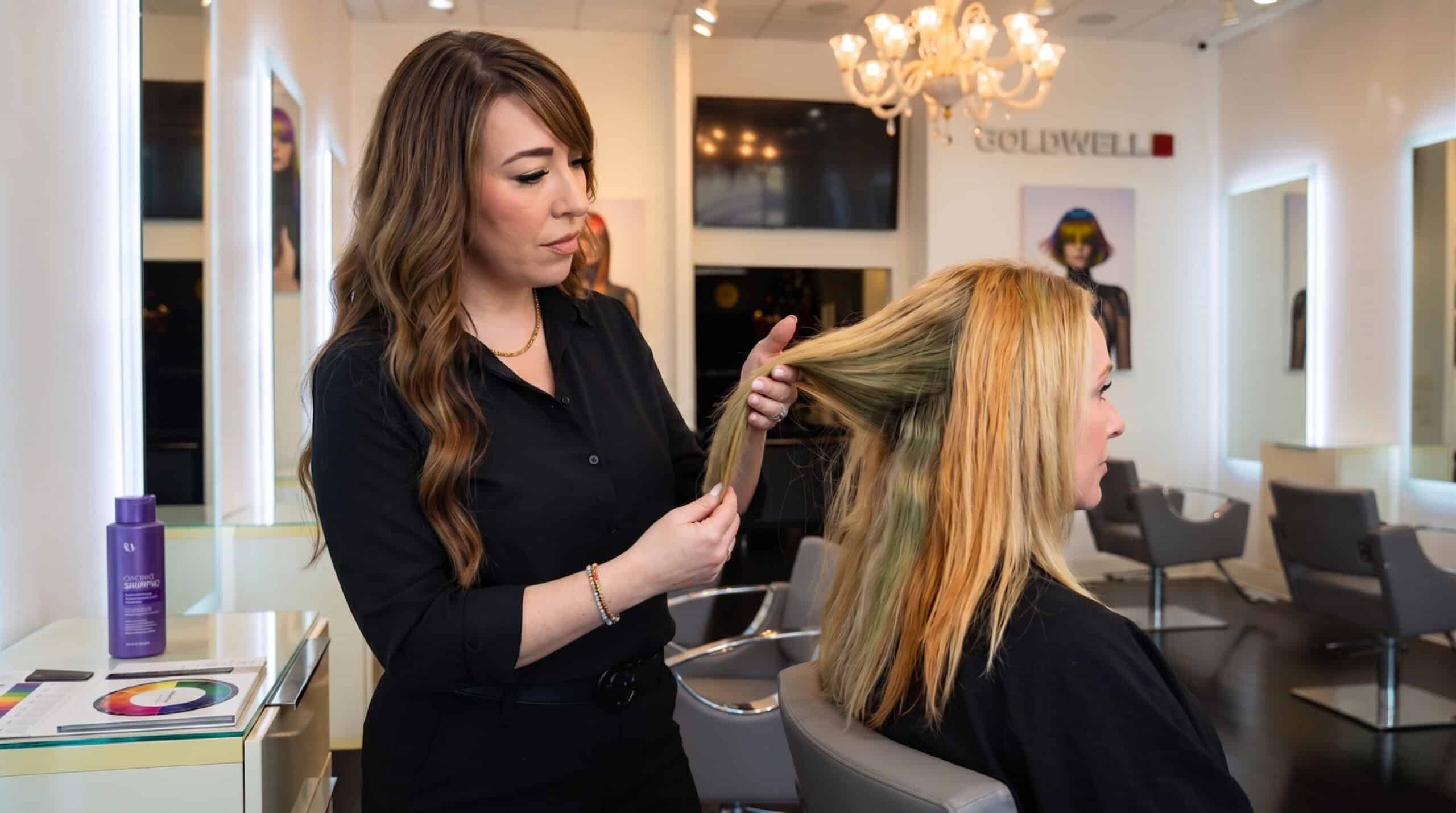
The most common technical culprits are sections that were too thick, the wrong developer strength, or uneven bleach application. Some stylists apply a foil technique and present the result as balayage — but foils create separated, defined sections rather than the diffused, hand-painted effect that makes true balayage look natural. That distinction matters when it comes to diagnosing the problem and choosing the right fix.
Product choices after lightening play a role too. Skipping toner entirely, choosing the wrong tone for the hair’s underlying warmth, or using dye incorrectly over pre-lightened strands can produce results that look fine in the salon and deteriorate within a week.
For Houston clients, there’s an additional factor. Houston’s water averages 137 mg/L total hardness according to the city’s 2023 Annual Water Quality Report. Mineral buildup can strip toner, alter hair color, and push balayage toward brassiness between appointments — not because anything was done wrong, but because local water conditions affect how color behaves after you leave the salon.
Can You Fix It At Home?
For mild tone issues, there are genuinely useful steps you can take right now. For structural problems, a home attempt will make the professional correction harder and more expensive.
When Purple or Blue Shampoo Actually Helps
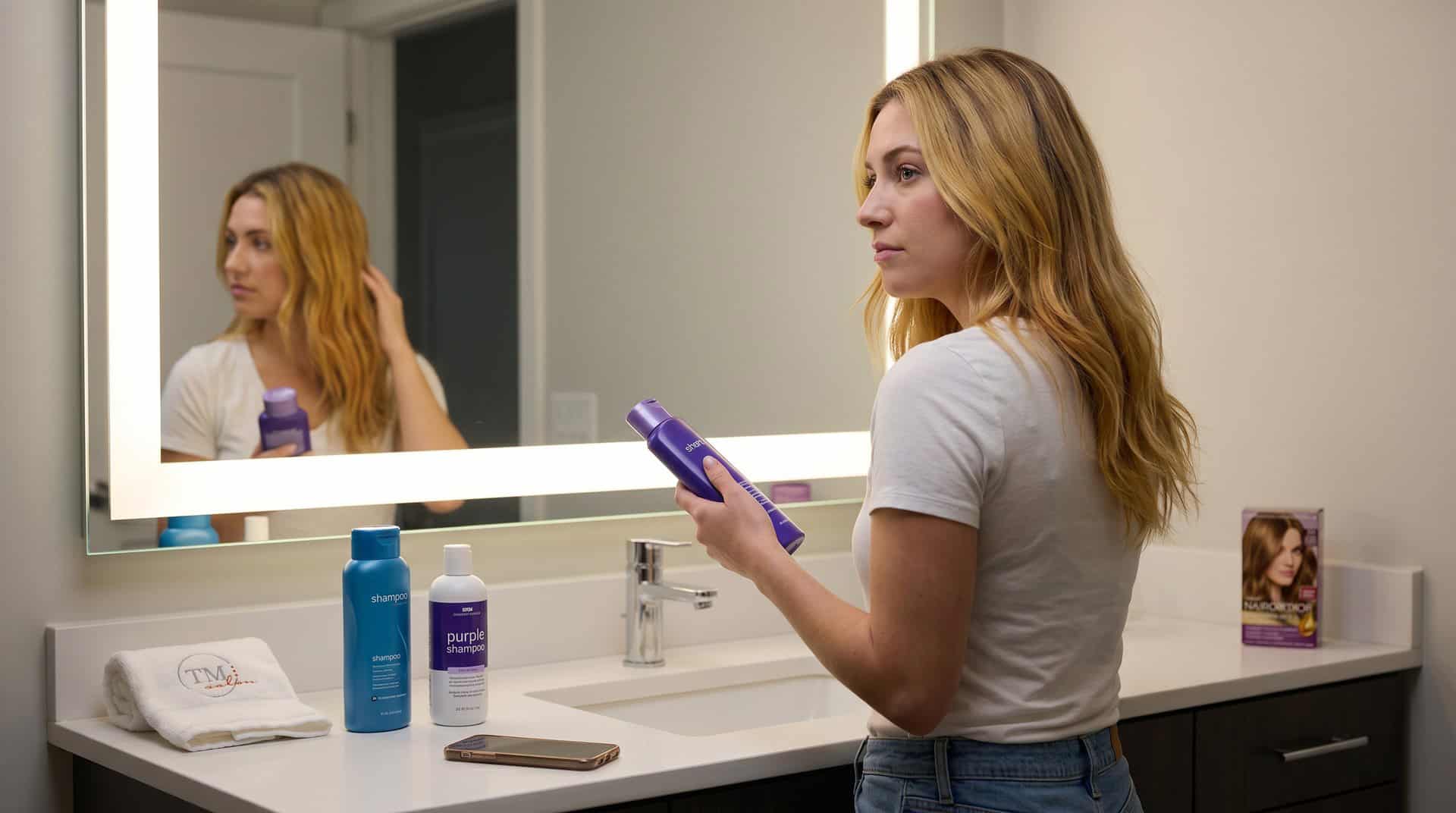
If your main complaint is brassiness — yellow or warm tones that appeared after washing — a toning shampoo is a reasonable first step. Purple shampoo neutralizes yellow and light brassy tones. Blue shampoo is better suited to deeper balayage hair with more orange-leaning warmth. Leave either on for three to five minutes, follow with a moisturizing conditioner, and use two to three times a week.
The critical limit: shampoo-based toning only adjusts the surface. It cannot correct patchy placement or uneven coverage. If your balayage looks structurally wrong — not just warm — no toning shampoo will change that.
One firm rule: do not attempt to lighten your hair at home after a failed balayage. That is the fastest way to turn a correctable problem into a genuinely serious one. If you’re unsure whether you’re dealing with a tone issue or a placement issue, a quick call to a salon before doing anything at home can save you from the wrong call.
When You Need a Professional: Color Correction Explained
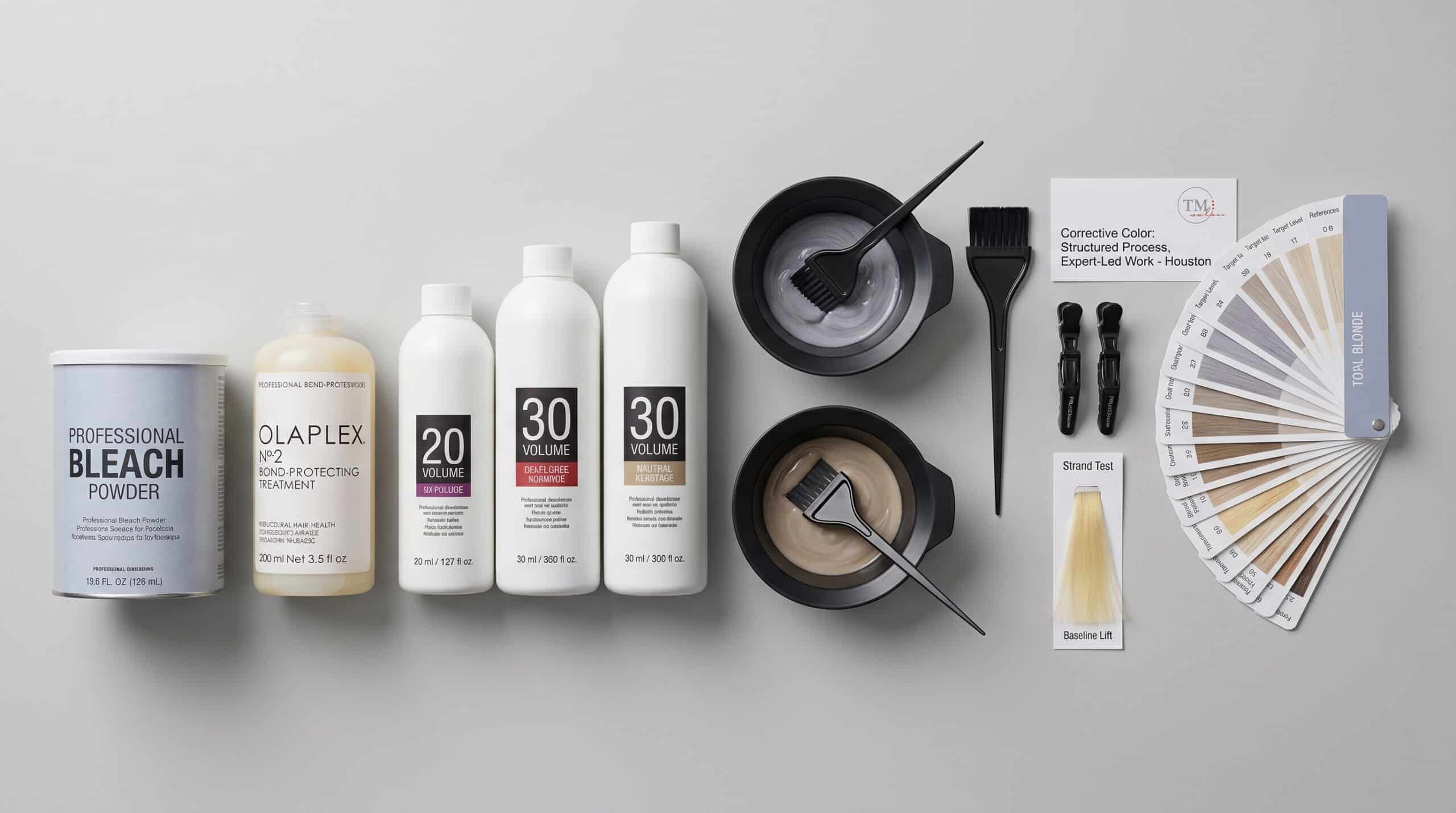
Color correction covers any professional service that addresses a previous hair color result. It might mean re-toning, re-lightening select sections, adding dye back in, or blending out harsh lines — and it sometimes takes more than one appointment.
Why Your Highlights Look Like Foil Work and How to Fix It
If your balayage looks more like traditional highlights than a natural melt, there’s a good chance your stylist used a foil technique rather than freehand painting. The fix isn’t starting over. A blending service can soften harsh lines by adding a shadow root, painting in lowlights, or applying a gloss to unify the tone — and a skilled stylist can often transform a striped result into something that genuinely reads as balayage.
Going from a warm or brassy base to something ashy and cool is a different kind of correction. It requires a professional formulation decision, not a purple shampoo project. Overcorrecting at home tends to push hair into flat, dull territory, which creates its own problems.
How many sessions you’ll need depends on your starting point. A mild brassiness issue may resolve in one toning appointment. Correcting an over-bleached or patchy result toward a balanced brunette balayage can take two or three sessions. Any reputable salon should assess your hair before committing to a timeline — if someone quotes a single session for complex work without seeing your hair first, pay attention to that.
Should You Go Back to the Same Stylist or Find Someone New?
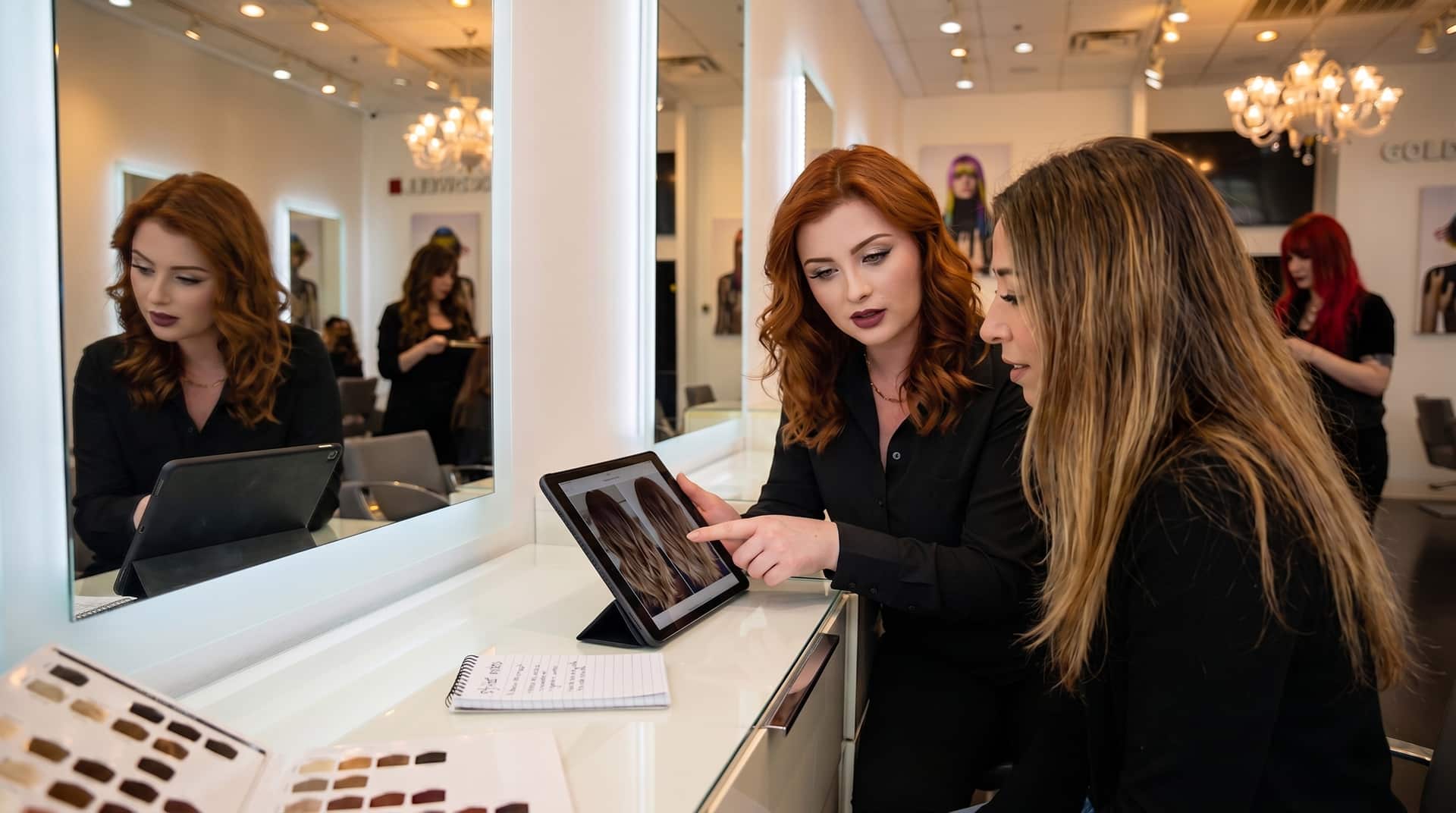
Going back makes sense when the stylist acknowledged the issue, the salon has a redo policy, and you have confidence the result was a fixable mistake rather than a skill gap. Finding someone new makes sense when you’ve been back once without improvement, your concerns were dismissed, or the original work showed a technical gap that requires a correction specialist.
When you call to book, use specific language: “I need a color correction consultation for a balayage result I’m unhappy with.” That signals the salon needs to block adequate time — not a standard appointment slot — and gives the stylist context to prepare.
Getting Your Balayage Fixed in Houston
Houston’s hard water and extended UV season both accelerate color fading and brassiness. A good stylist here should account for both when formulating your color and building your maintenance plan — that means recommending a gloss or toning service every six to eight weeks and a purple or blue shampoo for home use, not just sending you out the door with generic aftercare advice.
At Trademark Salon in Houston, color correction consultations happen before any corrective service begins. The team assesses your hair color, bleach history, and realistic outcome before a plan is set — so there are no surprises about what the correction involves or how long it takes. You can reach the team directly at (832) 717-3422 to talk through your situation before booking anything.
Conclusion
A bad balayage is not a hair catastrophe. For most people, it’s a correctable problem that rarely requires starting from scratch. Mild brassiness can often be managed at home with the right shampoo routine. Placement issues, harsh lines, and over-processed results need a professional — but they are fixable with the right approach and honest expectations. If you’re in Houston and want a real assessment of where your hair stands, Trademark Salon offers color correction consultations before any commitment is made.
FAQ
Can a toner fix bad balayage at home?
A toner can neutralize mild brassiness, but only if the underlying placement is already solid. If your balayage looks patchy or has harsh lines, toner won’t fix the structure — it only shifts the tone of what’s already there. For surface-level warmth, a color-depositing gloss or toning shampoo is a reasonable starting point.
How many sessions does a balayage color correction take?
It depends on how far the hair needs to travel and how much previous bleach or dye is involved. Some corrections are completed in one appointment with toner and gloss. More complex cases — like correcting an over-bleached result back toward a natural-looking brunette balayage — may take two or three sessions done safely over time.
Why did my balayage go brassy so fast?
Brassiness happens when the warm pigments in the hair aren’t fully neutralized by the toner applied after bleaching. In Houston, hard water with high mineral content can strip toner faster and shift color toward orange or yellow more quickly than in softer water areas. A consistent purple or blue shampoo routine helps slow this between salon visits.
Is bad balayage the same as needing a full color correction?
Not always. Bad balayage ranges from mildly too warm — fixable with shampoo and toner — to completely wrong placement, which requires a multi-step professional process. Some corrections are quick. Others involve multiple sessions depending on how much needs to be addressed.
Can I use box dye to fix bad balayage at home?
Box hair dye applied over bleached balayage can grab unevenly on the lightened sections and create a patchy or flat result that complicates any future professional correction. If you need color added back in, this is work best handled by a stylist who can formulate the dye to match your specific hair and avoid compounding the damage.