
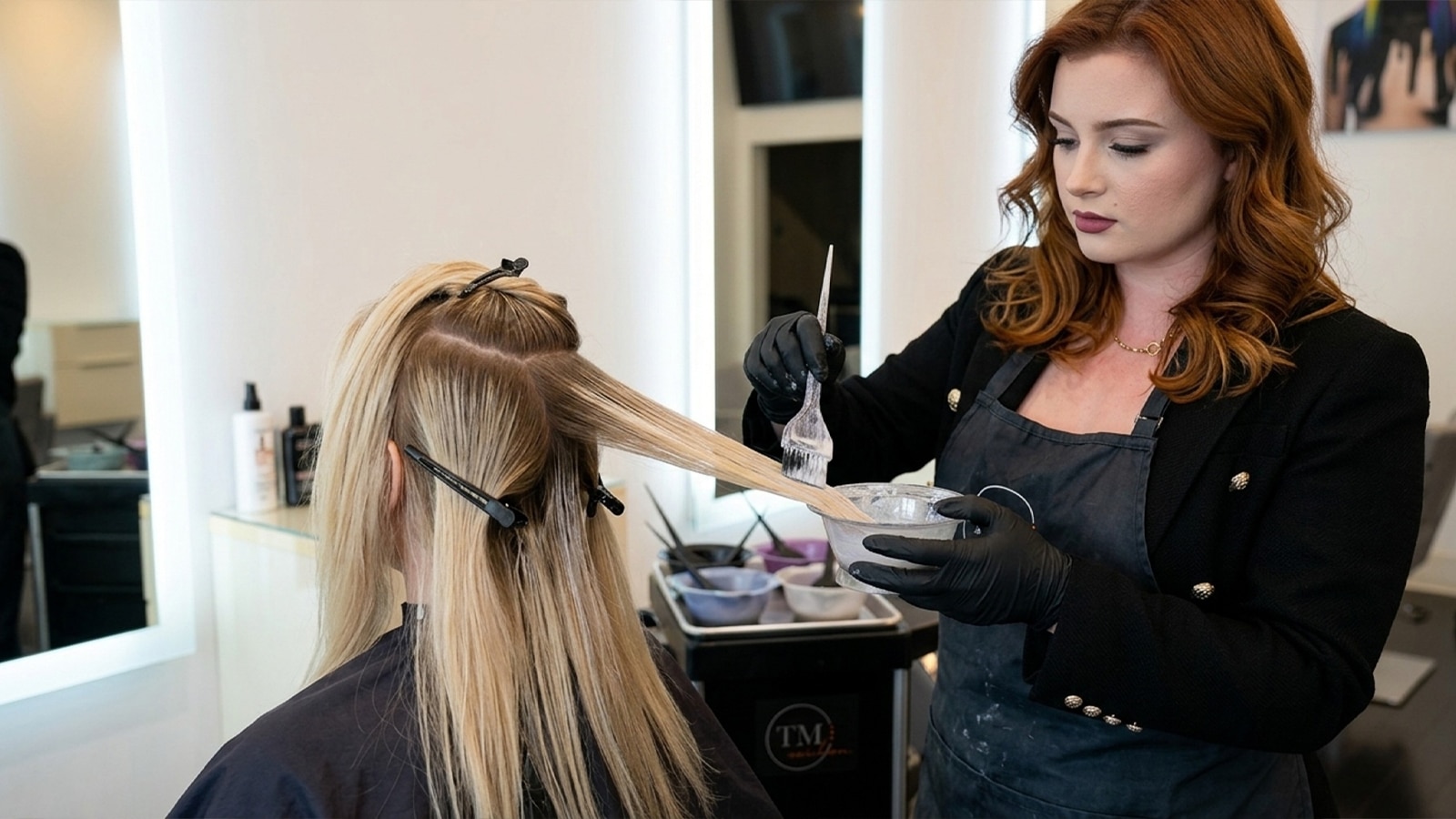
 July 15, 2026 | Hair Color
You’re picturing it already: a hard line where your natural color stops and the extension hair starts, or your fine strands frying under lightener they were never strong enough to handle. That fear is valid, and it’s exactly why balayage hair extensions require a different approach than either service gets on its own.
At Trademark Salon, a boutique salon on Louetta Road in northwest Houston, every service starts with a custom balayage consultation before we touch a single strand of extension hair. This combination is worth trying. It just depends on sequencing, not luck.
Key Takeaways
- Balayage and hair extensions can be combined safely, but only when a colorist plans placement, tone, and sequencing around your natural hair density and extension type.
- The biggest risks for fine or thinning hair are over-lightening near bonds or tape, uneven colour between natural and extension hair, and visible lines in ponytails or updos.
- Houston’s humidity and the typical 6-8 week move-up schedule mean colour mismatches show up fast, so waiting only makes correction more expensive.
- A specialist consultation before placement is the one fix that prevents costly redos and protects fragile natural hair.
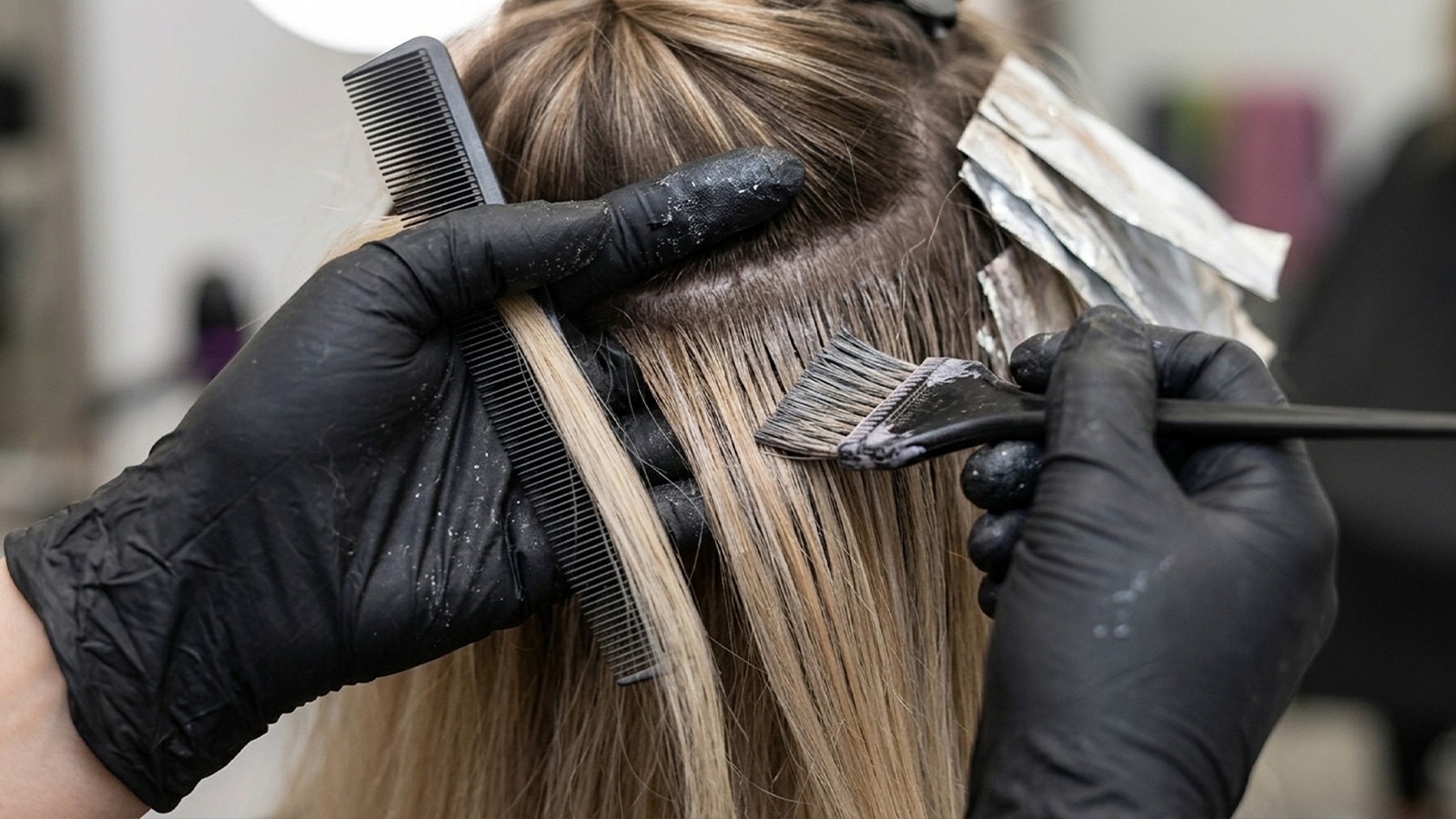
Why Balayage and Hair Extensions Can Clash on Fine or Thinning Hair
Most of the problems we see at the salon trace back to timing, product choice, or a colorist who doesn’t work with extension hair every day. If you’re already noticing regrowth that’s hard to blend or a previous extension job that never quite matched, that’s usually the moment to talk it through with someone who does this daily, rather than trying another box of dye first.
Why Attachment Points Are Vulnerable to Color Damage
Lightener applied too close to bonds, tape, or wefts weakens the adhesive, or the bond itself. Extensions meant to last six to eight weeks can slip or break within days instead. It’s one of the most common mistakes we correct, and one of the most preventable.
How Extension Hair Reacts Differently Than Natural Hair
Extension hair doesn’t process color the way your natural hair does, especially for synthetic strands or lower-grade Remy. A colorist unfamiliar with extensions can over-lighten the hair, or leave it a different tone entirely from the root. The mismatch often doesn’t show up until weeks later, once the color oxidizes.
Fine Hair Roots and the Risk of Breakage
Fine, thinning hair is already fragile near the scalp. Place lightener too close to the root, right where you need the most volume, and you risk breakage in the exact spot extensions were supposed to reinforce. Generic salons that color first and place extensions after, or the other way around, without any sequencing plan, are the most common source of this problem.
Houston’s humidity, running 60 to 80 percent for much of the year, speeds up how quickly a mismatched tone or a bulky attachment point becomes visible in everyday styling. That same 6-8 week move-up window is often when a poorly matched colour job stops looking subtle and starts looking like two different colours entirely. If you’re within a couple weeks of a move-up appointment and already seeing a shift in tone, it’s worth having a colorist look at it before that window closes.
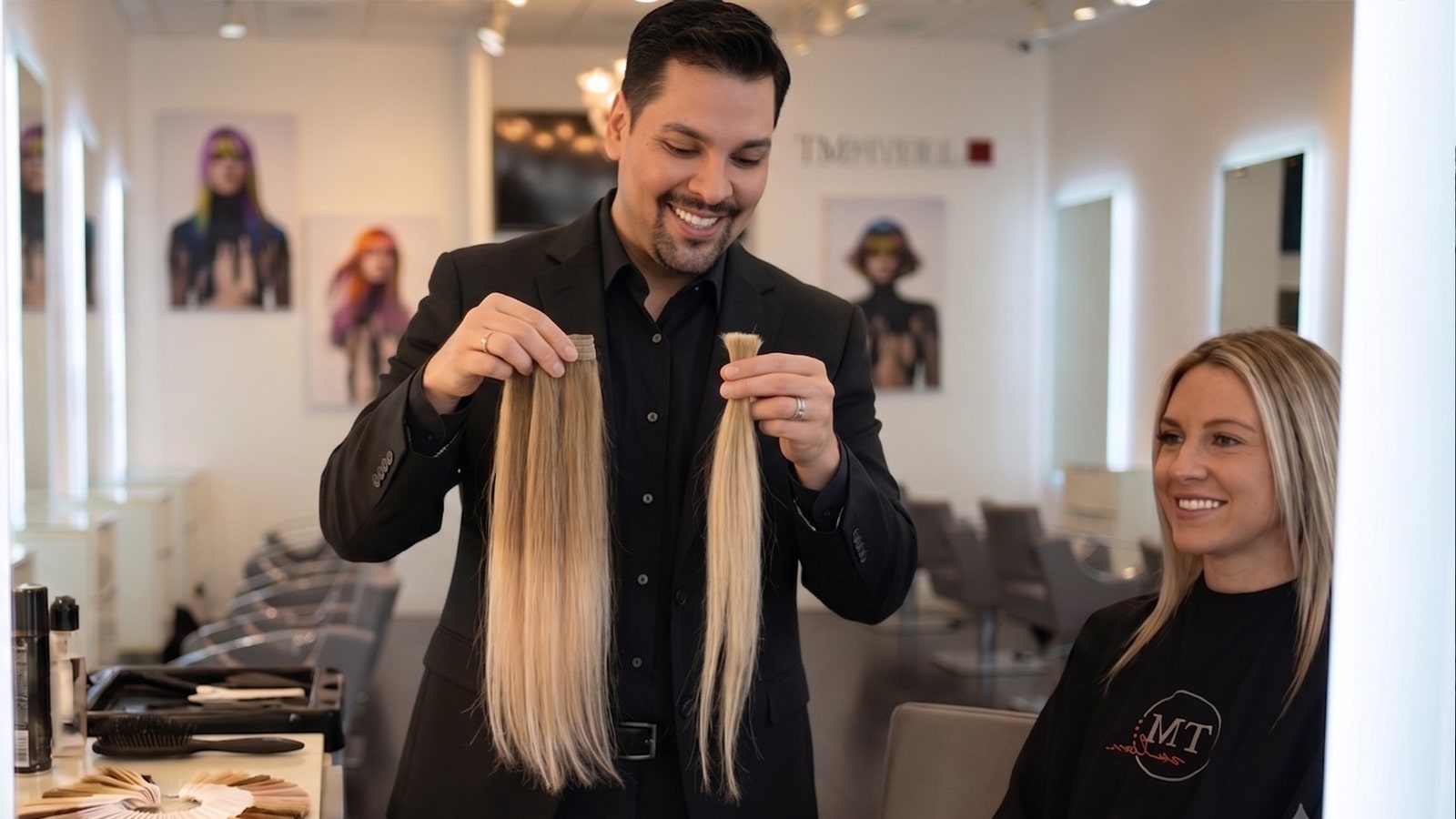
What a Natural-Looking Balayage Blend With Extensions Actually Requires
A blend that reads as natural doesn’t happen by accident. It starts with matching shade and tone to the extension type before a single piece is placed, and it depends on a colorist who treats that matching as the actual craft, not an afterthought.
Matching Shade and Tone to Your Extension Type
Tape-ins, hand-tied wefts, and Natural Beaded Rows (NBR) each hold color differently. A blonde shade or a warm brunette tone that reads correctly on a hand-tied weft may look flat, or brighter than intended, on tape hair. That’s why we color-match extension hair to your natural colour and your hand-painted highlight pattern before it ever touches your head, using the same toner and shade family throughout for a consistent look.
Why Placement Sequencing Prevents Visible Lines
Whether we colour before or after placing extensions depends on your density, your chosen extension method, and how bold or soft you want the highlight pattern. It’s a judgment call, not a formula, which is why a one-on-one consultation is standard practice here, not an upsell. One client came to us after a previous salon colored her hair first, then added tape-in extensions that oxidized to a noticeably different tone within a month. We removed the mismatched wefts, recolor-matched new hand-tied extensions to her regrowth, and sequenced the placement around her natural density so the blend held through her next two move-up appointments.
Comparing Extension Methods for Balayage Blending
Length also plays a role in how well each method blends, since longer extensions have more surface area where tone mismatches or bulky attachment points can become visible.
| Extension Type | Blend Suitability | Colour Flexibility | Typical Maintenance |
|---|---|---|---|
| Tape-In | Moderate, can look bulky at the root | Limited, harder to colour-match closely | Every 6-8 weeks |
| Hand-Tied Weft | Good, lies flatter against fine hair | Good, blends well with balayage | Every 6-8 weeks |
| Natural Beaded Rows / Nano | Best for fine or thinning hair, lightweight and damage-free | Excellent, colours as a natural extension of your own hair | Every 6-8 weeks |
This planning is what prevents the demarcation lines and premature slippage described above. It’s the difference between a balayage effect that looks sun-kissed and one that looks patched together, and it’s also how we keep clients ahead of the softer, more natural-looking balayage trend now favored over harsh, heavily foiled highlights.
Conclusion
Balayage and extensions can absolutely work together. Done right, the result looks like it grew that way, not layered on top of your hair. But that outcome depends on a colorist who plans your shade, tone, and placement around your specific hair texture and extension type before any work begins. Waiting only raises the stakes: mismatched color becomes more visible in ponytails and updos, over-processed bonds can fail within days, and a full color correction ends up costing more than getting it right the first time would have. Call (832) 717-3422 to book your free in-person consultation at Trademark Salon in Houston, and we’ll map your custom balayage and extension plan before a single strand is placed. There’s no pressure and no obligation, just a clear plan so you know what to expect before anything is colored or placed.
FAQ
Does coloring near bonds or tape-ins damage the attachment?
Coloring too close to bonds or tape adhesive weakens the attachment and causes early slippage. We control exactly how close lightener gets to those points, which is not something a box dye or a rushed salon visit can safely replicate.
Which extension type blends best with balayage for fine or thinning hair?
Lightweight, hand-tied methods like Natural Beaded Rows generally blend more naturally with fine hair than heavier tape or bulky wefts. The right choice still depends on your density and goals, which we assess during your consultation.
Should hair be colored before or after extensions are placed?
Sequencing depends on your natural hair density and the extension method you choose, so no single rule applies to everyone. This is a judgment call we make case by case, which is why generic salons that skip this step often end up with mismatched results.
Will balayage with extensions look fake or obvious against my natural hair?
Properly matched balayage, hand-painted and blended to your extension’s shade and tone, looks like it grew that way. Visible mismatches almost always trace back to skipping the colour-matching step, not to the combination itself.
How long does balayage last on hair extensions before needing a redo?
Balayage on extensions generally holds its look through the same 6-8 week move-up cycle common in Houston before natural regrowth starts to show. Professional placement and shade matching help the blend stay believable for longer between appointments.
Is combining balayage and extensions safe for thinning hair specifically?
Combining balayage and extensions is safe for thinning hair when placement avoids stressing the fragile areas near your scalp. A consultation that assesses your individual density determines the safest plan, rather than applying a one-size-fits-all approach.
Can I touch up my regrowth myself once extensions are in?
DIY blending kits cannot match a hand-painted balayage gradient or the exact tone of your extension hair, and using them risks creating harsh lines instead of a soft blend. Scheduling a professional touch-up keeps your style looking intentional instead of patched.