
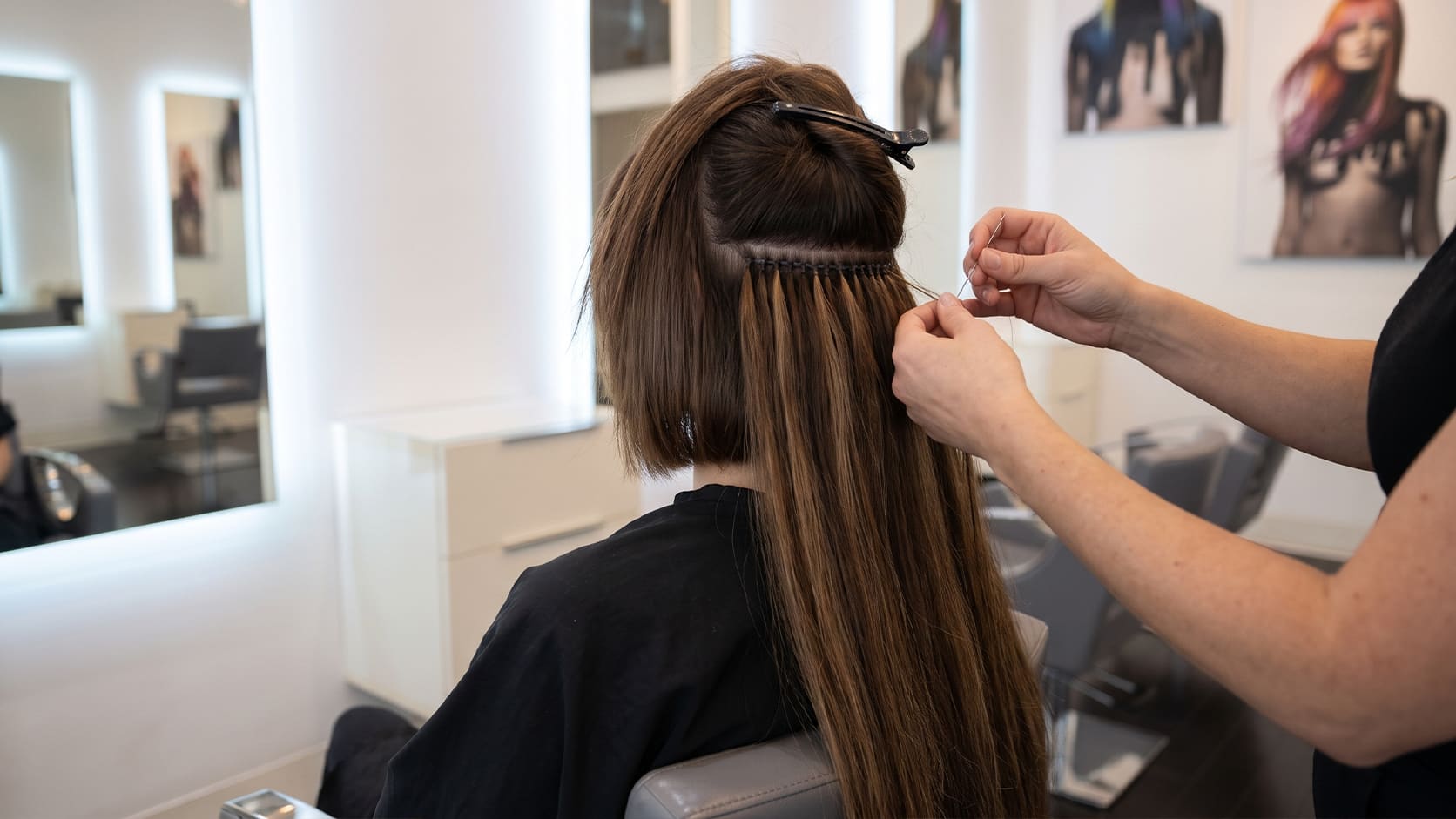
 November 5, 2026 | Natural Beaded Rows
Most hair can take extensions at about 3-4 inches for clip-ins and halos, 4-5 inches for tape-ins and wefts, and 5-6 inches for micro-links and fusion, although fine hair needs the upper end of each range. If you are weighing hair extensions for short hair, there is no single magic number, because your answer depends on the method you choose and how fine your strands are. Here at Trademark Salon in northwest Houston, we measure first and sell second.
Key Takeaways
- Minimum lengths run roughly 3-4 inches for clip-ins and halos, 4-5 inches for tape-ins and wefts, and 5-6 inches for micro-links and fusion.
- Fine or thin hair belongs at the upper end of every range because fewer strands carry the weight.
- Measure at the crown and nape, not at your longest layer, since that is where extensions actually sit.
- Under about 3 inches, waiting or bridging with clip-ins or a halo is often the safest move.
- A fine-hair consultation tells you honestly whether your length works today and which method protects your strands.
What Is the Shortest Hair You Can Get Extensions On, and Why Does Fine Hair Change the Answer?
Search online and you will find minimums of 3 inches, 4 inches, even 6-7 inches. They conflict because each page quietly covers a different method, and almost none adjust for fine strands. The table below puts the methods side by side so you can see where your length lands.
Comparison Table: Minimum Length by Extension Method
Use this as a quick guide to the main extension types, and plan around the high end of each range if your hair is fine.
| Method | Minimum length | Fine-hair suitability | Damage risk | Typical maintenance |
|---|---|---|---|---|
| Clip-ins | 3-4 inches | Good for occasional wear | Low if removed nightly | Daily on and off |
| Halo (flip-in) | 3-4 inches | Very good, no clips on the scalp | Low | Daily on and off |
| Tape-ins | 4-5 inches | Good with thin tape | Low to moderate | Every 6-8 weeks |
| Hand-tied wefts | 4-5 inches | Very good, lowest weight | Low | Every 6-8 weeks |
| Micro-link / I-tip | 5-6 inches | Fair, can slip on very fine strands | Moderate | Every 8-10 weeks |
| Keratin fusion (U-tip) | 5-6 inches | Fair, heat and bond weight matter | Moderate | Every 10-12 weeks |
Right on the line between two rows? That is common, and it is exactly what a measurement in person can settle.
Why Fine Hair Needs More Length
Fine strands are thinner than average, and there are often fewer of them. The same bond weight then sits on fewer follicles, and each one carries more stress. Dermatology sources describe traction alopecia as hair loss driven by ongoing tension, and fragile hair has much less tolerance for it. To avoid damage, a stylist wants enough natural hair to hold the extension without strain. More length also hides the attachment point, so nothing peeks out at the crown or nape, where scalp shows through first.
Can You Get Extensions on 3-Inch Hair?
Yes, but only with clip-ins or a halo, and only at the very edge of what is possible. Try the pinch test: if you can pinch a section between two fingers and feel real length in the middle, you have something to work with. If it slips out, wait. A good stylist will tell you so, and we do.
Which Extension Types Are Best for Short, Fine Hair?
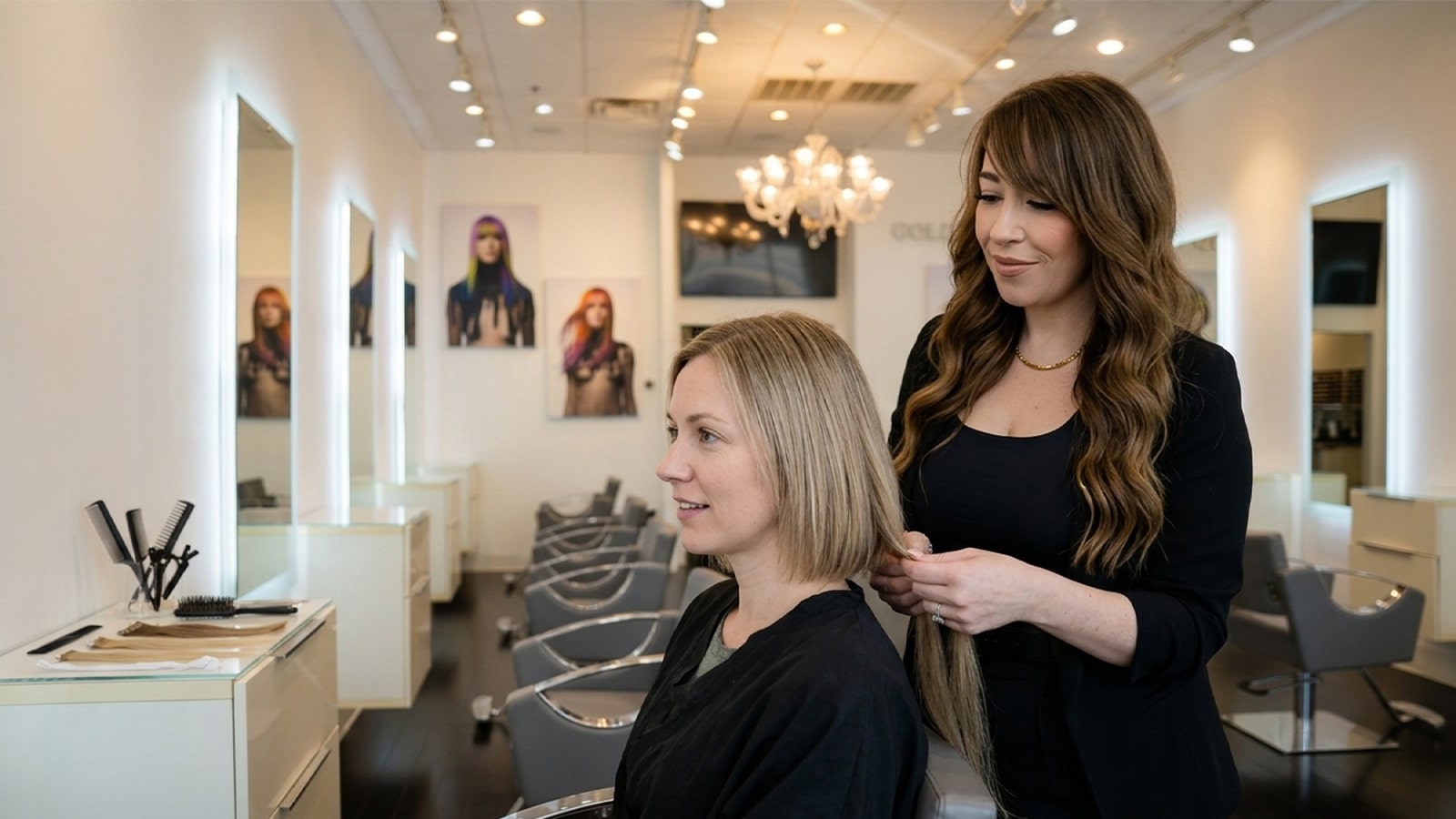
For most fine, short hair, the best choices are lightweight, low-tension options that lie flat. Hand-tied wefts rank first, tape-ins come next, and clip-ins or halos suit occasional use. Whatever you choose, ask for Remy human hair. Its cuticles run in one direction, so it tangles less and blends more naturally.
Tape-Ins and Hand-Tied Wefts
Tape-in extensions sit flat against the scalp, which helps them disappear in a bob. They work at roughly 4-5 inches, though fine hair should lean toward 5. The tradeoff is that tape can loosen in Houston humidity, so both the install and the care matter. Hand-tied wefts, including the style behind our Natural Beaded Rows, are even slimmer and lighter, and both Habit and Bellami sell hand-tied lines in this category. Wefts suit women who want low weight and fewer bonds, but they still need enough length to cover the track. If this is the method you are leaning toward, our hair extensions page shows how we approach lightweight, damage-free wefts.
Micro-Link/I-Tip and Keratin Fusion (Great Lengths, Hairdreams, So.Cap. USA)
These are strand-by-strand systems, and Great Lengths, Hairdreams, and So.Cap. USA are well-known names in keratin bond work. They look very natural when the hair is long enough, usually 5-6 inches or more. On very fine hair, though, micro-links can slip, and fusion adds heat and weight to each small section. We only recommend them when density and length both support the method, and for many fine-haired clients with short hair, they are not the first pick. If you are comparing clip-in and micro-link extensions, remember that the first is removable and gentle while the second is semi-permanent and demands more length.
Clip-Ins and Halos (Bellami Hair, Kitsch) as a Short-Hair Starting Point
Bellami Hair and Kitsch both make clip-ins and halos that work from about 3-4 inches. A halo is often kinder to fragile hair because it rests on a thin wire instead of gripping strands with clips. The bigger question is temporary versus semi-permanent wear. Clip-ins let you test the look before you commit, and short extensions in this format are the easiest way to see how added length feels. For a bob or lob, 12-16 inches is a good range to blend without overwhelming fine hair.
Can You Get Hair Extensions With a Pixie Cut, Bob or Post-Breakage Regrowth?
Usually not yet with a pixie, unless the crown and nape reach about 4-5 inches. A bob or lob is a much better candidate. Post-breakage and post-chemo regrowth can work too, with patience and a gentle method. Here is what we see at each length.
Pixie, Bixie, Chin Bob and Lob: What Works at Each Length
A true pixie is often too short for anything but a halo or a few clip-ins. A bixie, which is longer at the crown, may reach tape-in range at the back. A chin bob is the sweet spot, since it often has 4-6 inches at the nape, enough for wefts or tape-ins. A lob is usually long enough for any method. These cuts also differ in how well they hide a track, so we plan placement around yours. For post-chop or post-chemo regrowth, we go slowly, because healthy roots come first.
How to Test Your Length at Home
Grab a ruler and a mirror, then work through this checklist:
- Measure from the root at the crown straight to the end of that strand.
- Measure again at the nape, where hair is usually shortest.
- Ignore your longest layer. It will fool you.
- Do the pinch test: can you hold a section between two fingers?
- Compare your numbers to the table above, using the upper end if your hair is fine.
Here is a real example. A chin-length bob that looks like 6 inches at the front may measure only 3 inches at the nape, and that nape number decides your method. Shorter hair hides uneven length all the time. If your numbers land in between, a quick measurement in person will settle it.
If You Are Too Short: Bridge, Cut or Grow Out
You have three paths. First, bridge with a halo or clip-ins for events. Second, ask for a strategic cut that evens out your layers so growth looks intentional. Third, grow it out. Hair grows about half an inch a month, according to the American Academy of Dermatology as cited by Dyson, so expect roughly 3-6 months to gain the length you need.
Protecting Hair Health While You Wait
Fine hair grows best when the scalp is calm. A gentle shampoo, a light scalp massage, and a heat protectant all help. Skip tight ponytails. For styling tips during grow-out, try a side part, a soft texture spray, and a few small clips to keep short layers tidy while they catch up. Simple hairstyles like these keep awkward in-between lengths looking polished.
What Happens at a Fine-Hair Extension Consultation in Houston?
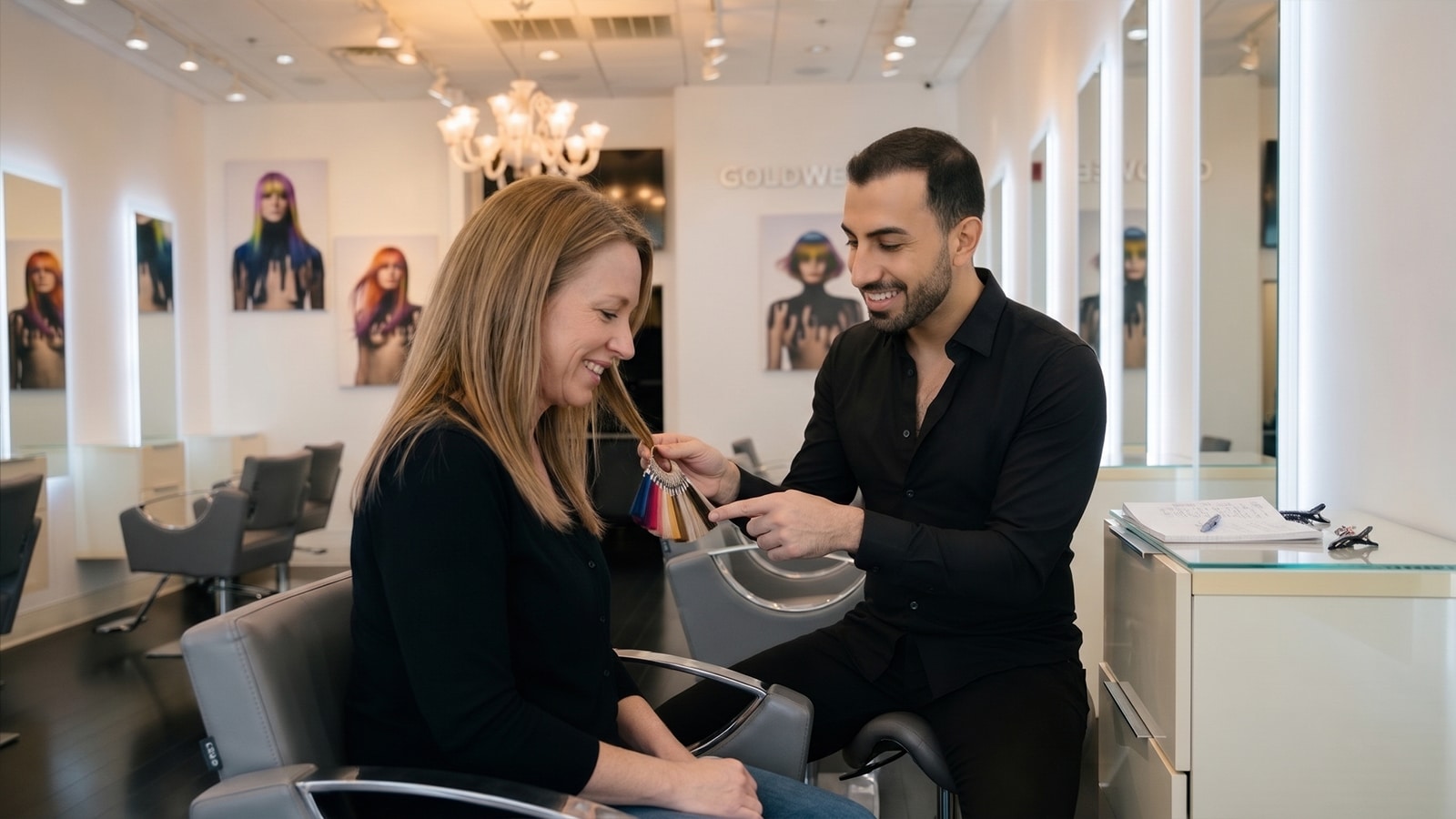
Every service at our hair salon begins with a one-on-one conversation about your goals, lifestyle, and maintenance habits, a practice we have followed since 2008. If your hair is not ready, we will say so. That honesty is the point of a professional consult, and it protects your hair.
Color Matching, Density and Hair-Count Planning
We start with color, matching extensions to your base and ends while accounting for highlights or color-treated hair. Houston’s hard water can mute or warm blonde tones, so toning becomes part of the plan. Next we assess density and strand strength, then build a custom hair-count plan, meaning we use only as many wefts or bonds as your hair can comfortably carry. Less weight is the best protection for delicate strands, especially on short hair. Most wearers return every 6-8 weeks for maintenance.
Aftercare for Houston Humidity and Sun
Houston averages about 75% relative humidity, with mornings often near 90%. That moisture can swell fine hair, cause frizz, and make tape or bonds more visible, but good care helps. Use a sulfate-free shampoo, brush gently from the ends up, and dry hair fully before bed, because sleeping on wet extensions can cause mildew. Check your sunscreen, too, since avobenzone can turn extensions and highlighted hair orange, according to Click2Houston. Rinse after pool days and keep products off the bonds. For more on taming Houston humidity, our guide covers the basics.
Conclusion
So how short is too short? It depends on your method, your hair texture, and where you measure. Aim for the upper end of each range if your hair is fine, and never trust a number taken at your longest layer. Some women are ready now, while others need a halo, a smart cut, or a few months of growth. All of those are good answers.
Whichever group you land in, you now know what to ask for and what to expect. If you would like a straight answer for your own hair, a fine-hair extension consultation at Trademark Salon in northwest Houston is a good next step. We will measure at the crown and nape, talk through your options, and tell you honestly whether to book or wait, because “not yet” is a perfectly good answer. You can reach us at (832) 717-3422 whenever you are ready.
FAQ
Can you get hair extensions with a pixie cut?
A pixie cut can take extensions only once the crown and nape reach about 4-5 inches. Before that, a halo or clip-ins can bridge the gap for special occasions. A stylist should measure the actual cut, because a bixie or growing-out pixie often qualifies sooner than a clipped one.
What is the shortest hair you can get extensions on?
The shortest workable hair is about 3-4 inches, and only for clip-ins and halos. Tape-ins and wefts need 4-5 inches, while micro-links and fusion need 5-6. Fine hair should plan for the upper end of each range, and a professional confirms the fit by measuring at the crown and nape.
Can you get extensions on 3-inch hair?
Three-inch hair can hold clip-ins or a halo, but nothing semi-permanent. It is the edge of what works, and many stylists will suggest waiting. Try the pinch test first, and if you cannot hold a section between two fingers, wait a couple of months or bridge with a halo.
What type of hair extensions are best for short, fine hair?
Hand-tied wefts and thin tape-ins are usually best for short, fine hair because they are light and lie flat. Halos work well for occasional wear, whereas heavier micro-link and fusion methods carry more risk. A consultation at a salon like ours matches the method to your density and length.
How long does it take for short hair to grow enough for extensions?
Most people need about 3-6 months. Hair grows roughly half an inch per month, so gaining 2-3 inches takes a while. You can bridge that wait with clip-ins or a halo, and a professional cut can even out your layers so growth looks smooth instead of awkward.
Do hair extensions damage short, thin hair?
Extensions can damage short, thin hair when the method is wrong, the weight is too heavy, or maintenance is skipped, and tension is the main culprit. Proper care, a low-weight method, custom hair-count planning, and visits every 6-8 weeks reduce the risk. A professional assessment is the safest first step.