 November 6, 2026 | Hair Tips
How to choose hair extension specialist comes down to four checks: an active license, training in more than one method, real experience with fine hair, and an honest consultation. The brand on the box is the easy part. The installer is the real decision, so before you book anything, learn what to ask about hair extensions and which answers should make you leave. You have seen the botched photos, and this guide gives you a concrete checklist to test any stylist before extensions touch your hair.
Key Takeaways
- Verify the license first. It takes under a minute and screens out unlicensed installers.
- Look for before-and-after photos on fine hair, not just styled glamour shots.
- Ask method-matching questions. A good specialist explains how we match method to your density and routine instead of pushing one system.
- Expect a written quote and an honest “you may not be a candidate” conversation.
- Walk away from any promise of “no damage.” Protecting hair health takes good fit, light tension, and upkeep.
Why Fine Hair Changes the Stakes: What Is the Best Type of Hair Extension for Fine Hair?
Fine strands are thinner and carry less weight. An install that looks great on thick hair can pull hard on fine hair. That is why the stylist and the method matter more than the brand name on the package. Even high-quality human hair extensions can strain fragile strands if the method is wrong for your density.
If you have been told “extensions just aren’t for thin hair,” that is not the whole story. The right method, placed by the right person, can work well. The sections below show you how to find that person.
Why Weight and Tension Matter More on Fine Hair
The American Academy of Dermatology notes that hairstyles that pull on the hair, including extensions, can cause traction alopecia. If the pulling continues, the loss can become permanent. That is not a reason to give up on extensions. It is a reason to ask how an installer measures weight and tension. A skilled specialist can tell you how many grams your hair can carry and where the attachment points will sit, so they stay clear of a thin hairline or part.
Good extensions also let your natural hair keep moving. Stiff, heavy attachments cut off that movement, and they tell you the method is too much for your density. Your daily life matters here too. Ponytails, workouts, and heat styling all change which method will hold up.
Which Method Fits Fine Hair? A Quick Reference
No single method is best for everyone. This table shows how each one tends to behave on fine hair. Brands are named as examples of each category, not as rankings.
| Method | How it attaches | Fine-hair suitability | Watch for |
|---|---|---|---|
| Hand-tied wefts (Habit Hair Extensions) | Thin wefts sewn to small beaded rows | Often a good fit; flat and light | Needs a trained installer |
| Beaded wefts (Invisible Bead Extensions) | Bead pliers and loop tools, no glue or heat | Often a good fit; low tension if sized well | Bead placement near thin areas |
| Tape-ins (Bellami, Glam Seamless) | Sandwiching technique with adhesive tabs | Can work; tabs can show on very fine hair | Weight of each tab |
| Keratin bond (Great Lengths, Hairdreams) | Heat-based fusion tools melt bonds onto strands | Possible, but bonds can be heavy on fragile hair | Removal needs care |
| Sew-in wefts | Weft sewn onto a braid track | Usually too much tension for fine hair | Pulling at the scalp |
| Clip-ins | Clips, removed daily | Gentle, no commitment | Clips can show at a thin part |
Weft extensions sit flat, which is why many specialists lean on them for thin hair. Still, the table is only a starting point. Your scalp, density, and lifestyle decide the answer.
How Do I Know If a Hair Extension Stylist Is Qualified? Start With the License and Training
Two checks cost nothing and take minutes. Both tell you more than a polished website ever will. Begin by researching local salons and making a short list of stylists whose work interests you, then narrow it to the ones who pass both.
Step 1: Verify the License, Then the Training
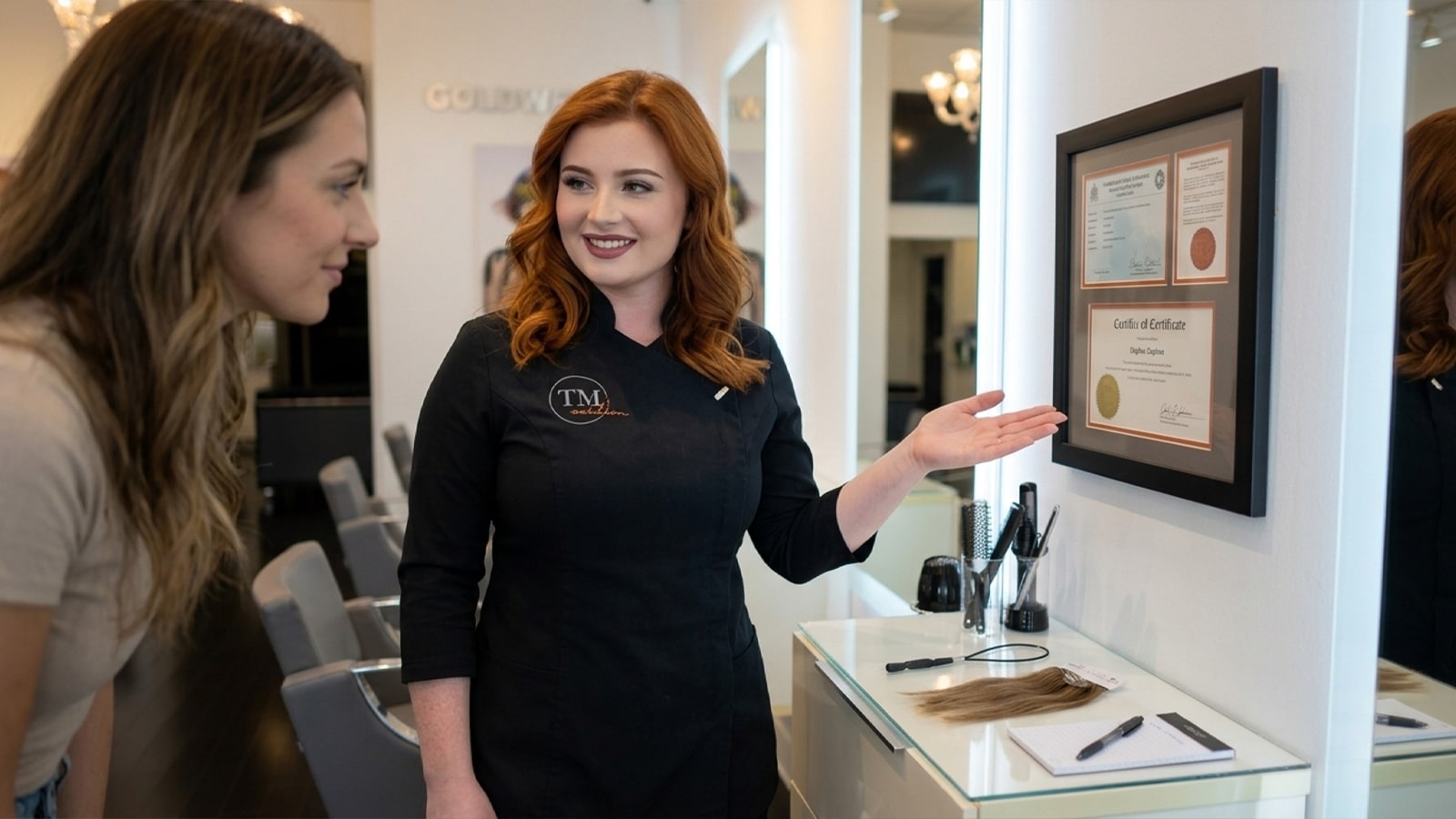
Every installer in Texas must hold a cosmetology license from the Texas Department of Licensing and Regulation (TDLR). You can confirm it with the free public license search. Other states have their own boards and similar lookups. A license proves a baseline of legal practice and safety training. It does not prove extension skill.
Brand-certified programs add another layer. Great Lengths, for example, runs a certification that includes a multi-day course and a live-model day. Hairdreams, Invisible Bead Extensions, Cashmere Hair Extensions, Euronext, Habit, Glam Seamless, and Bellami each have training of their own. A certificate shows someone finished a course on that system. It does not prove good judgment on fine hair or skill that stays sharp over time. Real hair knowledge shows up in how a specialist explains things, so listen for specifics. The Professional Beauty Association is another place to read about industry standards and education.
Step 2: Audit the Stylist Portfolio
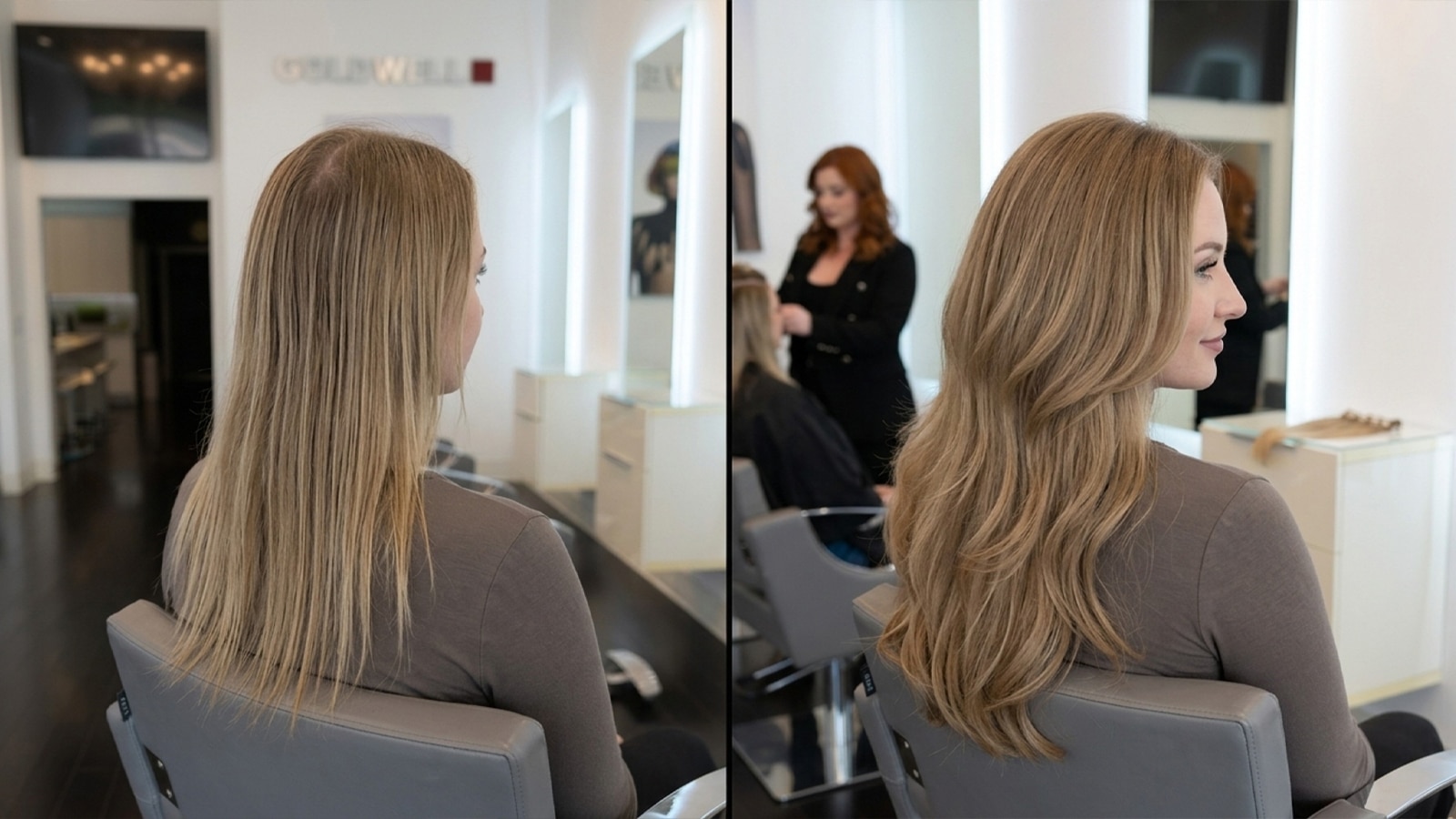
A strong portfolio shows fine-hair before-and-afters, not only long, thick, styled results. Look for photos from several angles, including the part and hairline. Look for grow-out photos that show an install weeks later. The natural blending should make the extensions hard to spot at the crown.
Check that the work is original. Run a reverse image search on a few photos, because stolen or stock images often turn up on other sites. Inconsistent backgrounds and a total lack of in-progress shots are warning signs too. Compare a few salons side by side.
Then start reading reviews. Skip the “love it!” lines and hunt for comments about comfort, blending, and how the hair held up. Happy clients mention specifics, not just star ratings, and those details are the clearest signal of client satisfaction. Ask whether past clients with similar density will share photos. A client who is still happy after her first move-up tells you more than a fresh install does.
What Questions Should I Ask a Hair Extension Stylist Before Booking?
Treat this like a scorecard. Specific answers earn trust, and vague ones tell you something too. Bring these questions to the call or the consultation. A good specialist will be glad you asked.
Questions About Method, Fit, and Experience
A good specialist can explain the “why” behind a method recommendation, so start here.
- Which method do you recommend for my density, and why? A good answer mentions grams, section size, and at least one alternative.
- How do you match the method to my real-life demands, such as ponytails and workouts?
- How many fine-hair clients do you install each month?
- What is your extension experience with methods other than the one you sell most?
- Can I see photos of previous clients with hair like mine?
Questions About Hair Quality, Pricing, and Maintenance
Ask what grade of hair you are buying. Remy means the cuticles all run the same direction. Virgin means the hair was never chemically processed. Cuticle-aligned means the cuticles were kept intact and facing one way. Quality human hair tangles less, lasts longer, and holds natural movement better. Ask about the source and the brand, and whether a color match or toning is included.
Then ask for numbers. Can you give me my full first-year cost in writing, including hair, install, and move-ups? How often will I need a move-up, and what does each one cost? A good installer answers without hesitation. “It depends on your scalp and density” is fine, but only if details follow. Ask them to figure out your total up front rather than quoting a vague range.
Questions About Removal, Aftercare, and What Happens If Something Goes Wrong
Ask who handles removal, what it costs, and how long it takes. Ask what daily care looks like: which brushes, what wash routine, which products to skip. Proper aftercare is what keeps hair healthy between move-ups, so a solid plan puts it in writing. Finally, ask what the policy is if you feel pulling, notice shedding, or see damage. A specialist with a clear answer takes responsibility. One who changes the subject doesn’t.
If you would rather talk through these questions than write them down, you can call us at (832) 717-3422. We are happy to answer them, even if you are still deciding whether extensions are right for you.
How Do I Evaluate the Consultation, and Which Red Flags Should End the Conversation?
A consultation is a job interview for the installer. Judge it the way you would judge any hire. Before you commit, check what the consultation they are offering actually covers.
What a Good Consultation Includes
A good consultation is one-on-one, unhurried, and held before any hair is ordered. It should cover your scalp and density, so hair health is checked before anything is attached. It should include a talk about strand weight and how much your hair can carry. The color match should be checked in natural light. You should leave with a written quote that lists hair, install, and maintenance separately. And if your hair is too fragile, an honest “you may not be a candidate yet” conversation is a good sign, not a bad one.
A specialist should be able to explain how we match method to your density, not just list brand names. A good hair stylist walks you through the reasoning in plain terms. You should never feel rushed or talked into anything.
Should I Pay for a Hair Extension Consultation?
A modest fee, often credited toward your service if you book, is common and reasonable when it buys a real assessment and a written quote. A free consultation can be fine too, as long as it comes without pressure. What matters is what you receive, not the price tag. If a fee buys only a sales pitch, skip it.
Red Flags That Should End the Conversation
Leave if you hear any of these:
- A guarantee of “no damage.” No one can honestly promise that.
- One method recommended for everyone. That points to a sales script, not an assessment.
- A refusal to explain weight or tension, which hides the exact risk you are worried about.
- An install with no consultation first, which skips the step that protects your natural hair.
- Pressure to buy hair on the spot.
- No aftercare plan, which leaves you on your own the minute you leave the chair.
A professional welcomes your questions. Walking away costs nothing.
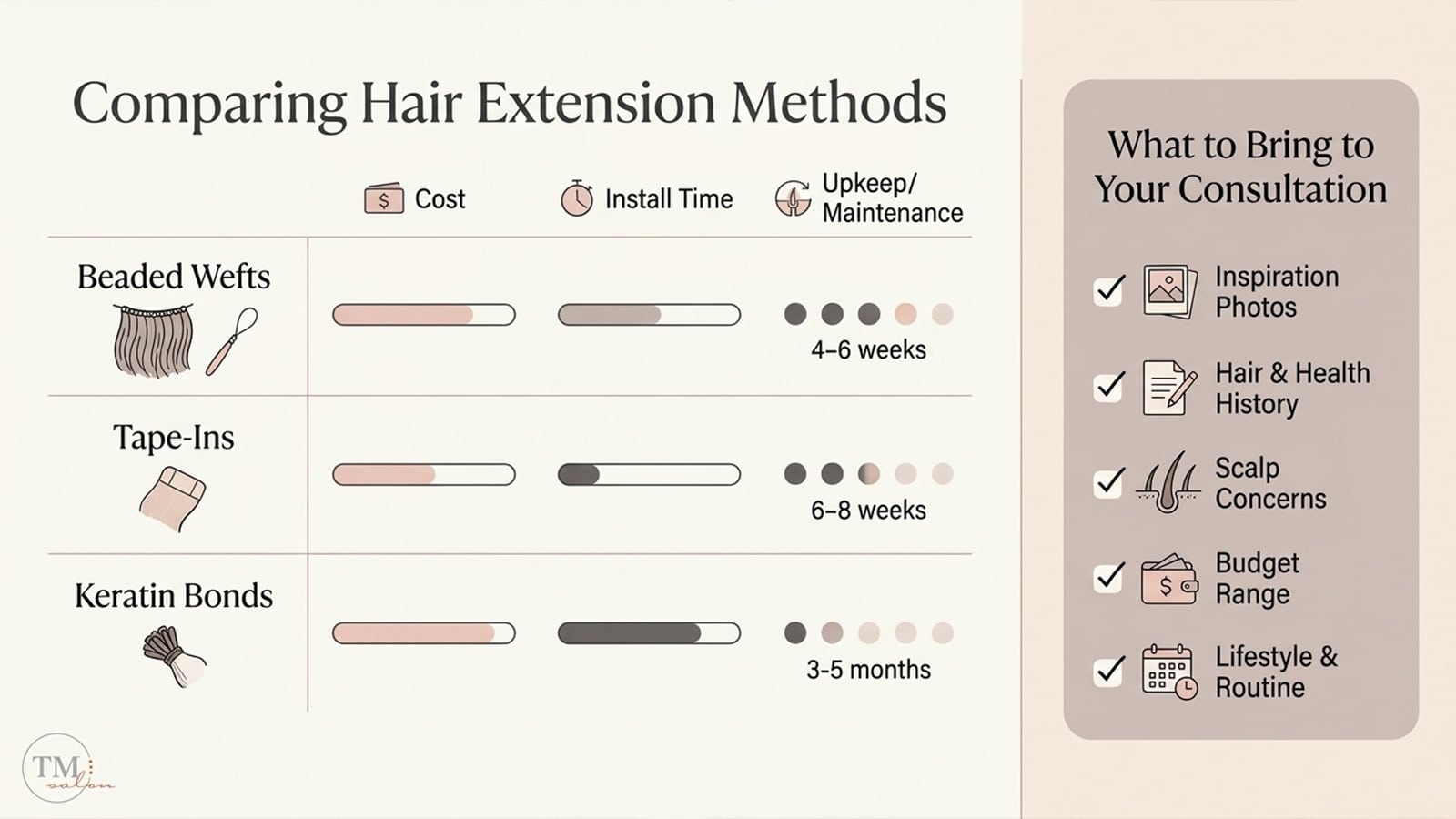
How Much Do Hair Extensions Cost With a Professional Stylist, and What Should You Bring?
Prices swing widely by method, hair quality, and installer. One cost guide models a first-year total of roughly $1,350 to $6,200 for medium-density hair at 18 to 20 inches. Treat the table below as general ranges to compare, not a quote.
Typical Cost and Timeline by Method
| Method | Day-one cost | Install time | Maintenance interval | First-year picture |
|---|---|---|---|---|
| Clip-ins | Lowest | None | Daily wear | Lowest total |
| Tape-ins | Moderate | 1 to 2 hours | Every 6 to 8 weeks | Moderate, with several move-ups |
| Keratin bond | Higher | 3 to 5 hours | Every 8 to 12 weeks | Higher, with longer gaps |
| Hand-tied or beaded wefts | Higher | 2 to 4 hours | Every 6 to 10 weeks | Higher, hair is often reusable |
Read the table by first-year total, not day-one price. A method with a bigger upfront cost can cost less over twelve months if the hair is reusable.
Why Cheap Installs Can Cost More
A low price often hides repair costs. A rushed install can mean slipped attachments, tangled hair, and damage that has to be corrected or removed elsewhere. To find your real cost, add the hair, the professional installation, each move-up, and the removal. Get that total in writing. The true bargain is the install you only pay for once.
What to Bring to Your Consultation
Gather inspiration photos, but pick looks that suit your density. Write down your hair history, including color, bleach, and chemical treatments. Note any scalp or health concerns, such as shedding, thyroid issues, or recent pregnancy, and share them openly. Bring your budget range and a plain description of your lifestyle. Tell the specialist how you wear your hair each day and what level of upkeep you are willing to do. It helps them choose the right method and care plan. The more honest you are, the better the fit. If you are unsure what to bring, ask when you book. A good salon will tell you.
Conclusion
The right installer matters more than the right brand. Verify the license, study the portfolio, ask specific questions, and judge the consultation by its honesty. Use this checklist as a recap. Confirm an active license and ask what training they have beyond it. Find fine-hair before-and-afters and grow-out photos. Ask about method fit, weight, and tension. Get a written first-year quote. Learn the removal, aftercare, and damage policy. Walk away from “no damage” promises and sales pressure.
You now have a process you can trust and permission to walk away from anyone who fails it. Shortlist two or three installers, run the license lookup, and put the question checklist to each one. Then book a consultation with the stylist who answers specifically and honestly. If you would like to see how we approach it, you can read about our hair extensions. Take your time. A good specialist will not rush you.
FAQ
What questions should I ask a hair extension stylist before booking?
You should ask about method fit, fine-hair experience, hair sourcing, total first-year cost, removal, and the damage policy. A good specialist answers with specifics like grams, section size, and maintenance timing. If the answers stay vague or defensive, keep looking for a professional who welcomes detailed questions.
How do I know if a hair extension stylist is qualified?
A qualified stylist holds an active state cosmetology license, has brand-certified training, and shows portfolio proof on hair like yours. Check the license on your state board’s free lookup. Certification alone does not prove skill, so pair it with photos, reviews, and honest answers during a consultation.
What is the best type of hair extension for fine hair?
No single type is best for everyone with fine hair. Lightweight, low-tension methods such as hand-tied or beaded wefts often suit thin hair well. The final choice depends on your density, scalp, and routine, which is why a professional assessment should come before any purchase.
How much do hair extensions cost with a professional stylist?
Costs vary widely by method, hair quality, and installer. One guide models a first-year range of about $1,350 to $6,200 for medium-density hair. Ask for hair, install, move-up, and removal costs in writing. Cheap installs often cost more later in repairs.
Should I pay for a hair extension consultation?
Paying a modest, credited fee is reasonable if it buys a real assessment and a written quote. Free consultations are fine too when they come without sales pressure. Judge the value by what you receive: a scalp check, a weight discussion, a color match, and honest advice.
How can I tell if a hair extension stylist is experienced with thin or fine hair?
An experienced specialist shows fine-hair before-and-afters, grow-out photos, and photos from several angles. Ask how many fine-hair clients they install each month and whether previous clients with similar density will share results. They should also explain weight and tension in plain, specific terms.