
 September 7, 2026 | Hair Color
Standing in front of the mirror picking apart brassy patches or a harsh regrowth line feels a lot bigger than it actually is. Here’s the calming truth: hair color correction is a well-established, well-understood professional service, not a last resort before a drastic chop. At Trademark Salon, our approach to hair color begins with figuring out exactly what went wrong before any chemical touches your strands. This article covers what the process involves, how long it takes, what it costs, and how to know if your hair is a good fit for it.
Key Takeaways
- Color corrections start with diagnosis. A strand test, porosity check, and color history review always come before any chemical service.
- Most color corrections take one to several sessions, often spaced two to six weeks apart to protect your hair’s health.
- Cost depends on complexity and time, not a flat rate. Expect a wider price range than a standard color service, especially with multiple sessions or bond-building treatments like Olaplex.
- Houston’s hard water and humidity can make brassiness and dull color show up faster than in other climates. That’s one reason correction requests are so common here.
- A consultation with a strand test is the only way to know if your hair is a good fit for correction, or if it needs a slower, phased plan.
Signs You Need a Professional Color Correction
Some color problems show up the moment you step out of the shower. Others creep in over weeks. Here’s what usually tells us a client needs a color correction instead of a simple touch-up.
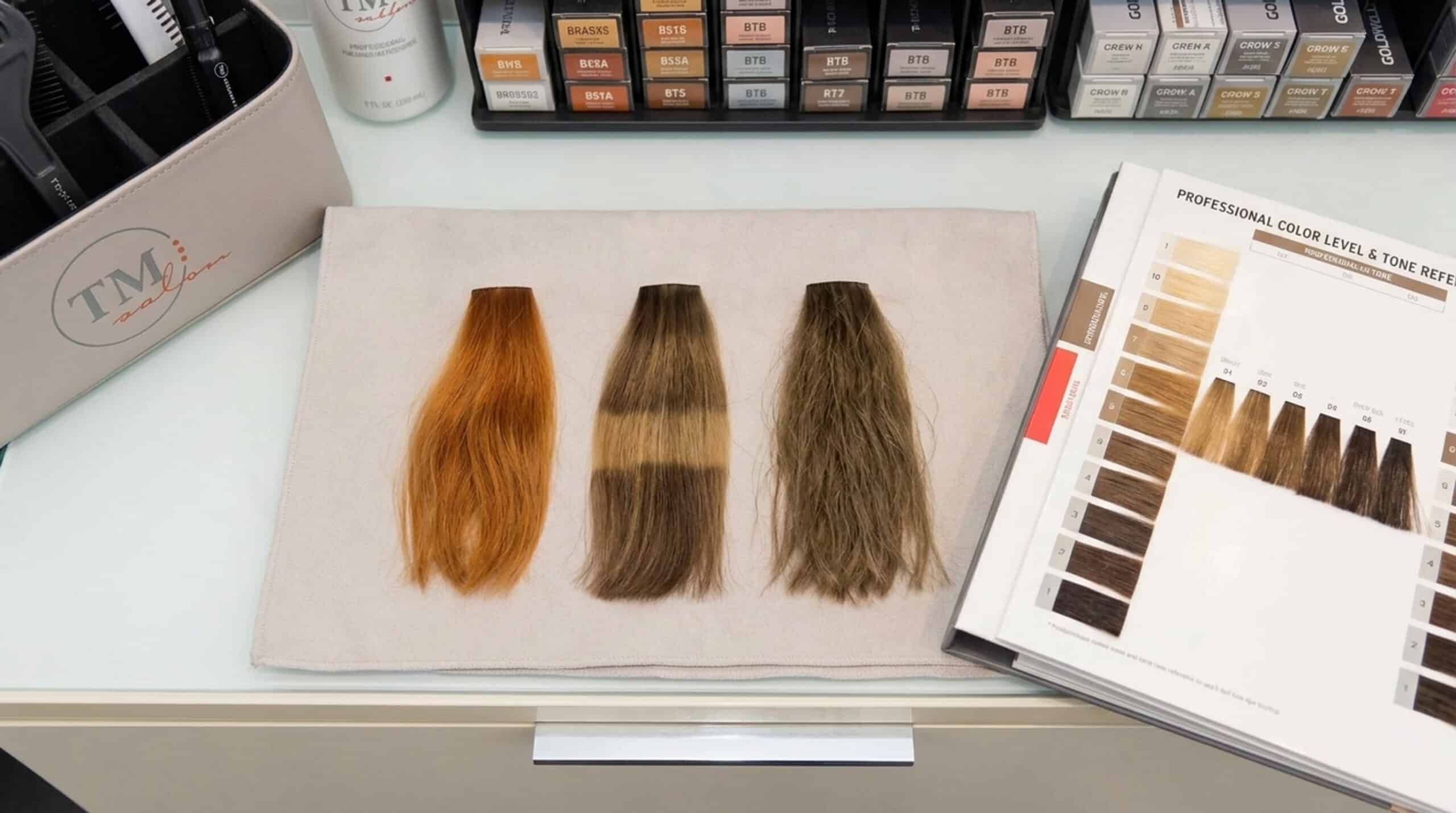
- Brassy, orange, or yellow tones that weren’t part of the plan
- Uneven color, with patches darker or lighter than the rest
- Banding, or a visible line where new growth meets old color
- Muddy, flat tone from repeated box dye buildup
- A greenish or ashy cast, often from minerals or chlorine
- Straw-like texture and breakage from an over-processed bleach job
- Color that doesn’t match what you asked for at your last salon visit
If any of this sounds familiar, take a breath. None of it is unusual, and none of it means your hair is beyond help. It just means it’s time for an expert to take a look.
Common Color Problems We See in Houston Clients
Houston’s tap water carries a fair amount of calcium, magnesium, and iron. These minerals build up on your hair and dull your color, which is a big reason brassiness complaints are so common here. Add in strong sun, high humidity, and a swim season that lasts most of the year, and color fades and shifts faster than it would in a cooler, drier city. We also see plenty of clients whose color corrections are complicated by mineral buildup alone, with no box dye or bleach involved at all. Many are surprised to learn that hard water by itself can be enough to call for a color correction, even without a single at-home hair coloring attempt in their history. Because hard water damage tends to build gradually, we often see clients who need color corrections long before they realize mineral buildup is the culprit.
When a Small Fix Isn’t Enough
A single toner treatment can fix mild brassiness. But once you’re dealing with patchy color, a hard line where colors meet, or box dye piled on layer after layer, that’s a color correction job, not a quick gloss. Even one of these signs is reason enough to book an evaluation with an experienced stylist. If you’re not sure which category your hair falls into, that’s a completely normal question to bring to a consultation rather than try to answer yourself in the mirror.
What Actually Happens During a Color Correction
Every color correction starts the same way: with information, not chemicals.
The Diagnostic Phase: Strand Test, Porosity, and Color History
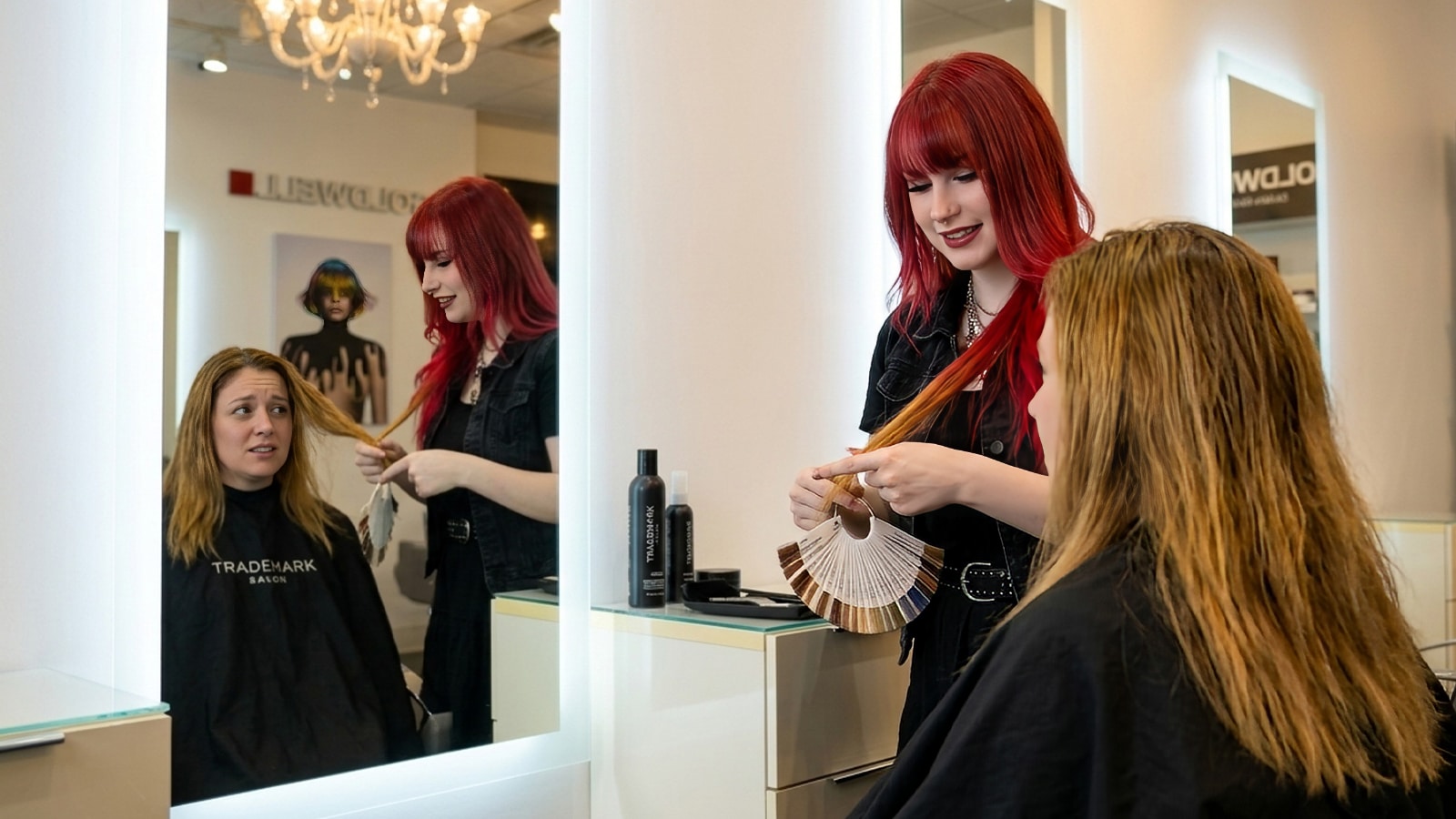
We start with a strand test on a small section of your hair to see how it reacts before we touch the rest of your head. We also check your hair’s porosity and run an elasticity test, gently stretching a wet strand to see how much it stretches and springs back. Porosity tells us how your hair will take in and hold new color. Elasticity tells us how much processing it can safely handle.
We also go over your color history in detail. Every color correction depends on knowing exactly how your hair has responded to past hair coloring. Virgin hair behaves very differently than previously colored hair. Knowing what products and treatments have already touched your strands shapes every decision from here.
The Corrective Phase: Removal, Toning, and Glossing
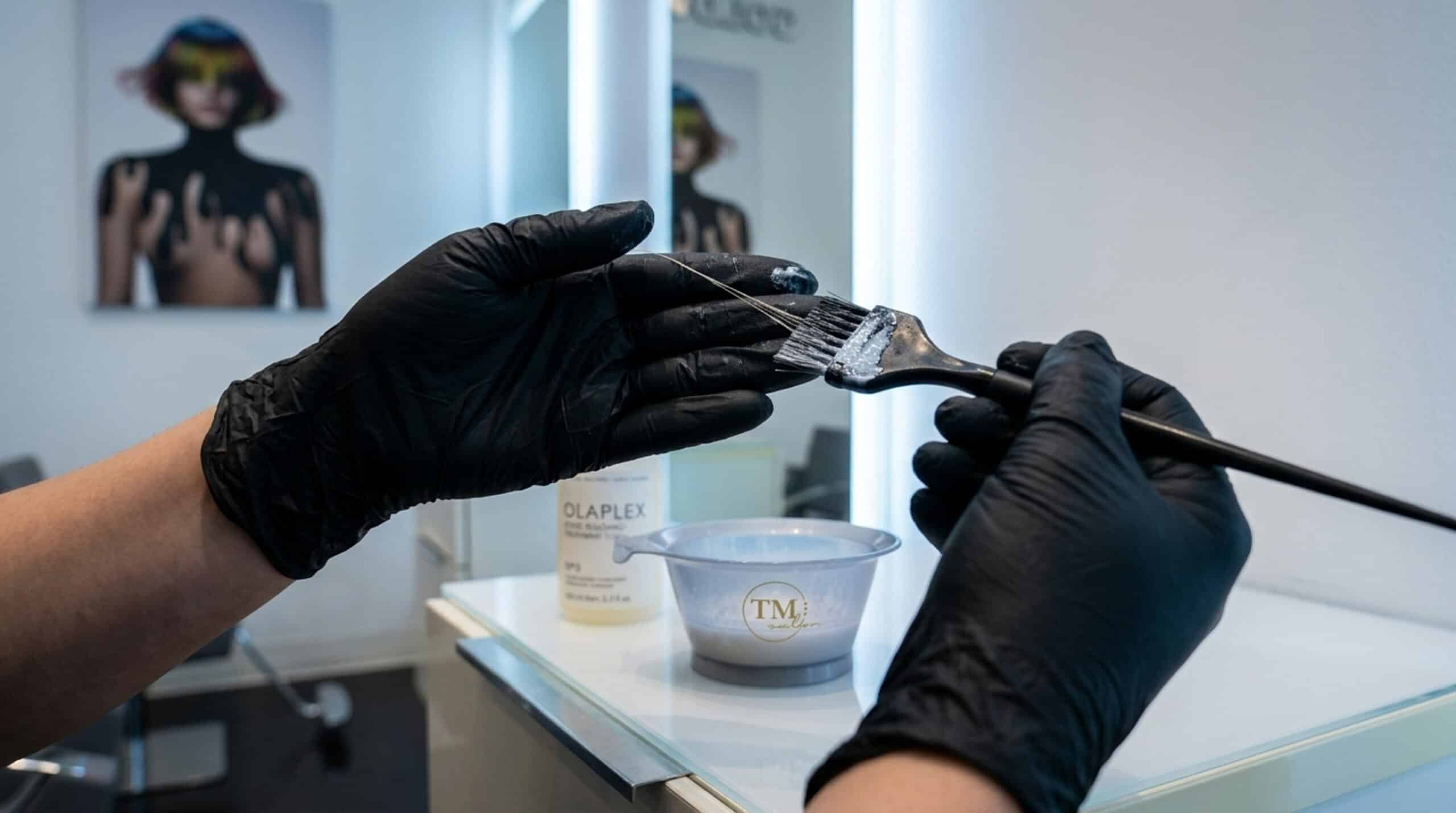
Once we know what we’re working with, the fix begins. That might mean using a color remover or a gentle bleach bath to lift unwanted tone without a full re-bleach. Next comes toning. This is where color theory matters: every tone has an underlying level and undertone, and the right toner cancels out what you don’t want, whether that’s orange, yellow, or green.
After that, we may need to fill in lost pigment before applying a demi-permanent or permanent color for the final look, a step our stylists treat as carefully as the original hair coloring service. No two color corrections follow the exact same path. Your hair’s coloring history, its current condition, and your goal color all shape the plan.
How Long Does Color Correction Take? & How Much Does It Cost?
This is usually the first thing people want to know. The honest answer: it depends on how much repair work your hair actually needs.
Single-Session vs. Multi-Session Corrections
Minor brassiness or a small toner fix can often be handled in one appointment. Heavy box dye buildup or serious bleach damage usually needs two to four sessions, sometimes more. We space these sessions two to six weeks apart to protect your hair and avoid over-processing it between visits. Rushing a color correction is exactly how already-weak hair ends up breaking.
How long your color correction takes depends a lot on where you’re starting from: your hair’s level, its damage, and how far you want to go from your current shade.
What Affects the Cost of Color Correction
Color correction pricing is never one flat number. Any salon that quotes you a price without seeing your hair first isn’t being straight with you. Think of cost as tied to time and complexity instead. Because color corrections vary so much from client to client, your stylist will always want to see and test your hair before naming a number. Multi-session color corrections carry a higher total cost than single-visit fixes, simply because of the extra time and product involved. Complex color corrections that require several rounds of toning and bond repair sit at the higher end of that range.
| Factor | How It Affects Time and Cost |
|---|---|
| Number of sessions needed | More sessions mean more total cost, spaced out for hair health |
| Gloss or toner add-ons | Refines final tone, adds to session time |
| Hair length and density | Longer, thicker hair needs more product and time |
| Bond-building treatments (Olaplex) | Protects strength during lifting, adds to session cost |
| Severity of existing damage | More damage usually means a slower, more careful plan |
Can Brassy or Orange Hair, and Box Dye Disasters, Actually Be Fixed?
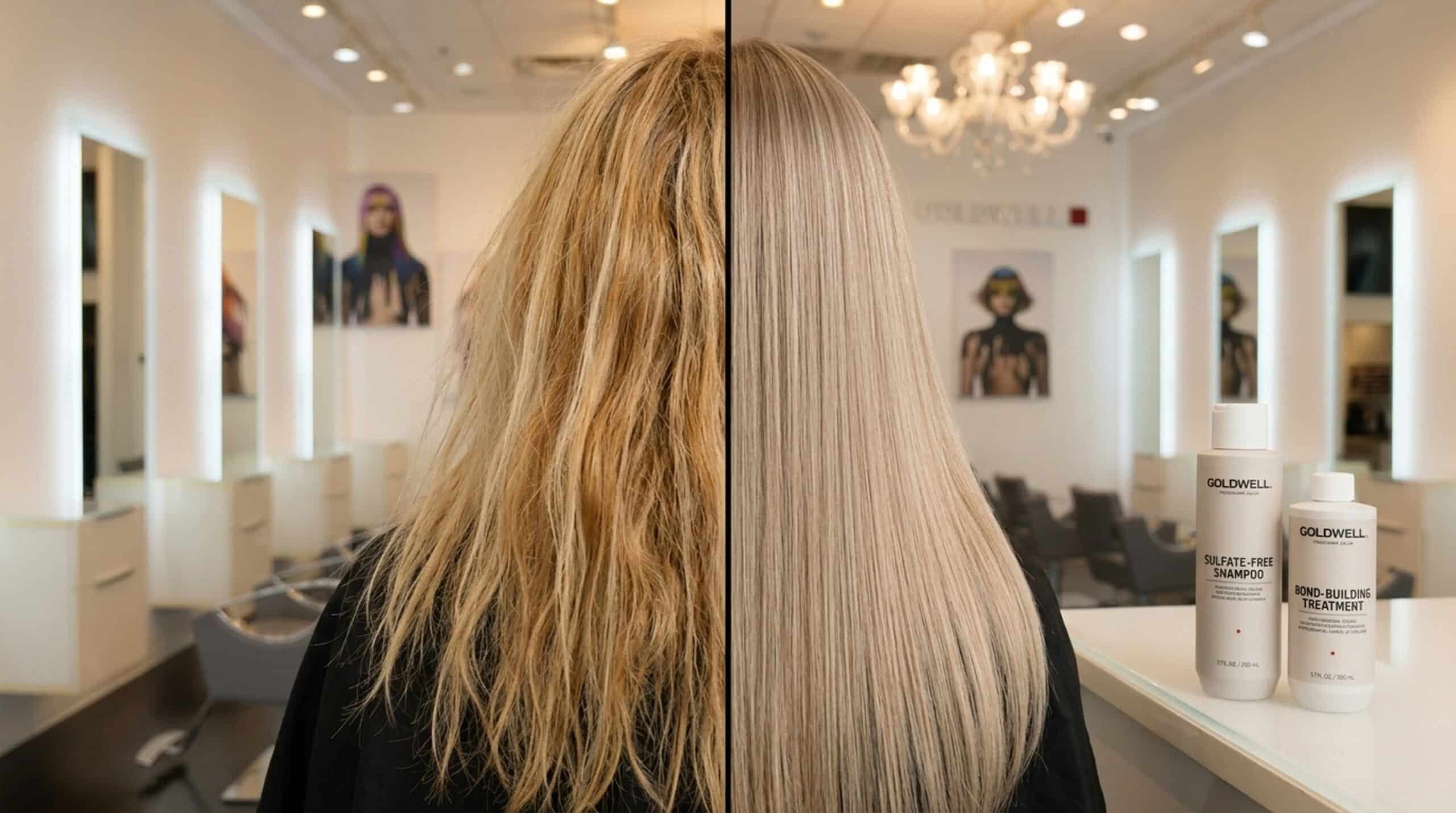
In most cases, yes. Brassy and orange tones respond well to toning and color theory, whether your goal is blonde hair or a rich dark result. The real question isn’t whether we can fix it. It’s how many sessions it will take to get there safely, and how much color correction your hair can comfortably handle along the way.
Is Color Correction Bad for Your Hair?
The correction itself isn’t what causes damage. Professional color correction, done with bond-building treatments and proper spacing between visits, actually protects your hair while it changes. The real damage usually comes from rushing, from stacking chemical services too close together, or from DIY attempts at home. That’s the real risk, not the process. This is exactly why color correction is best left to a trained stylist rather than attempted with another box of dye.
How Do You Fix a Box Dye Job Gone Wrong?
A stylist fixes a box dye disaster with professional color removal, followed by careful toning and filling. Adding another layer of box dye almost always makes buildup worse, not better. If your color turned too dark or muddy from repeated home hair coloring, removing the unwanted color safely has to come first. Box dye disasters are one of the most common reasons clients seek out color correction in the first place.
Sometimes, though, badly damaged hair needs a strand cut, a growing-out period, or a slower, phased plan instead of one big session. That’s not a failure. It’s the responsible answer, and it’s one your stylist should tell you honestly instead of promising to fix badly damaged hair in a single visit. If a stylist tells you this, take it as a good sign. It means they’re planning around your hair’s actual health, not just the appointment in front of them.
Color Correction vs. a Regular Color Service: What’s the Difference?
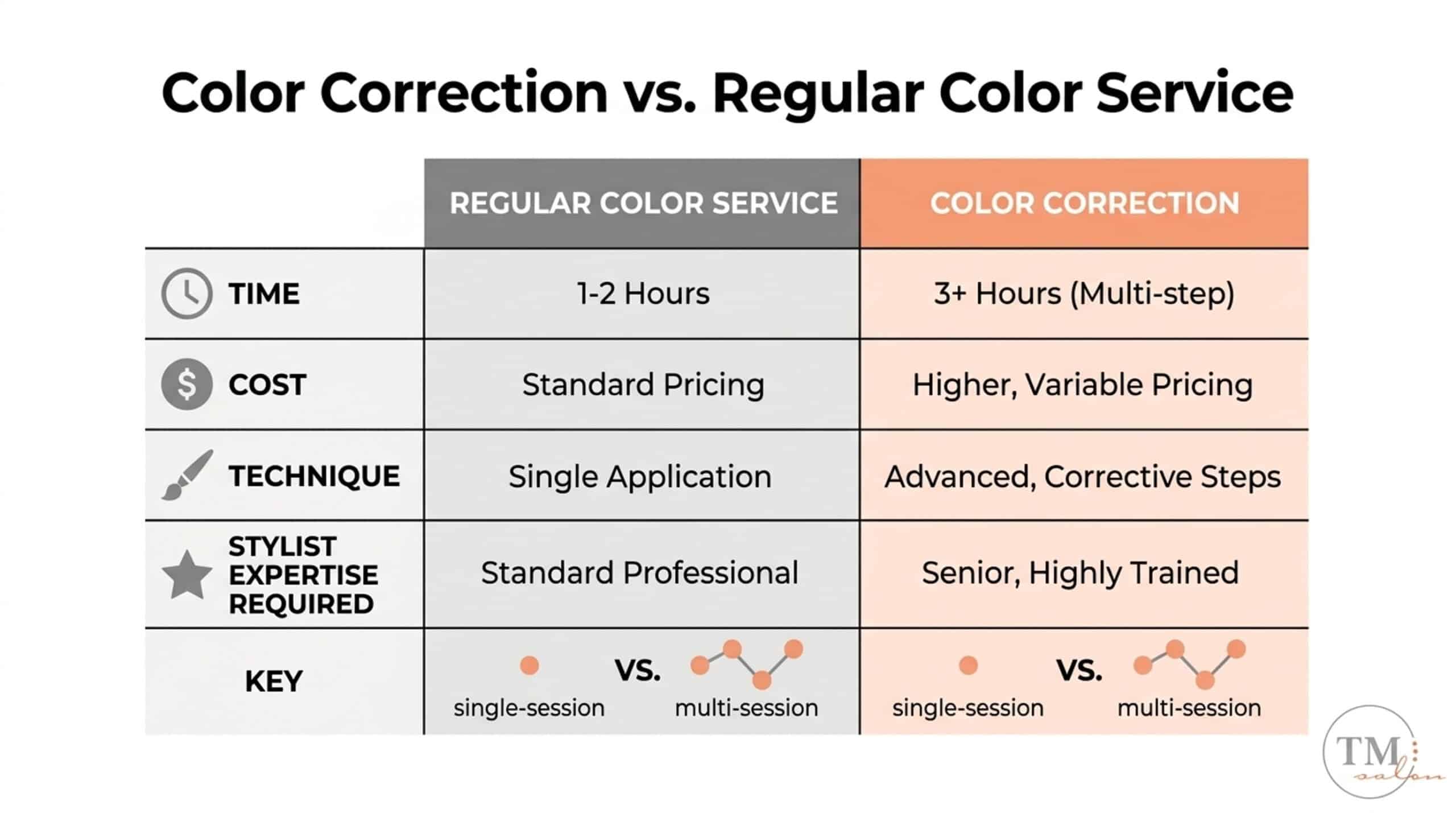
A regular color service starts from a fairly known place. Your stylist knows your current color, you agree on a new one, and the path between the two is simple. Professional hair color correction starts from an unknown or damaged place. That’s why diagnostics come first, every time.
How Diagnostics and Pricing Differ
Corrective work takes more time, more product knowledge, and often more sessions than a standard color service. That’s why color correction usually costs more and takes longer to book than a routine appointment. It’s its own skill, built on color theory and chemistry, and it’s a big part of why an experienced stylist trains for years to master hair coloring at this level. It’s not just a longer version of a regular color service, and comparing the two side by side is often the easiest way for clients to understand why color correction carries its own pricing structure entirely. Clients often ask whether color corrections and regular color services can be priced the same way, but the added diagnostics and session planning almost always set color corrections apart.
If you’re curious how these same chemistry principles play out in techniques like balayage or ombre, our guides on what balayage is and what ombre is break those down. For a deeper look at what actually happens chemically during any hair coloring service, see the science behind hair coloring.
What to Bring to Your Consultation
Coming prepared helps us build the right plan faster. Bring:
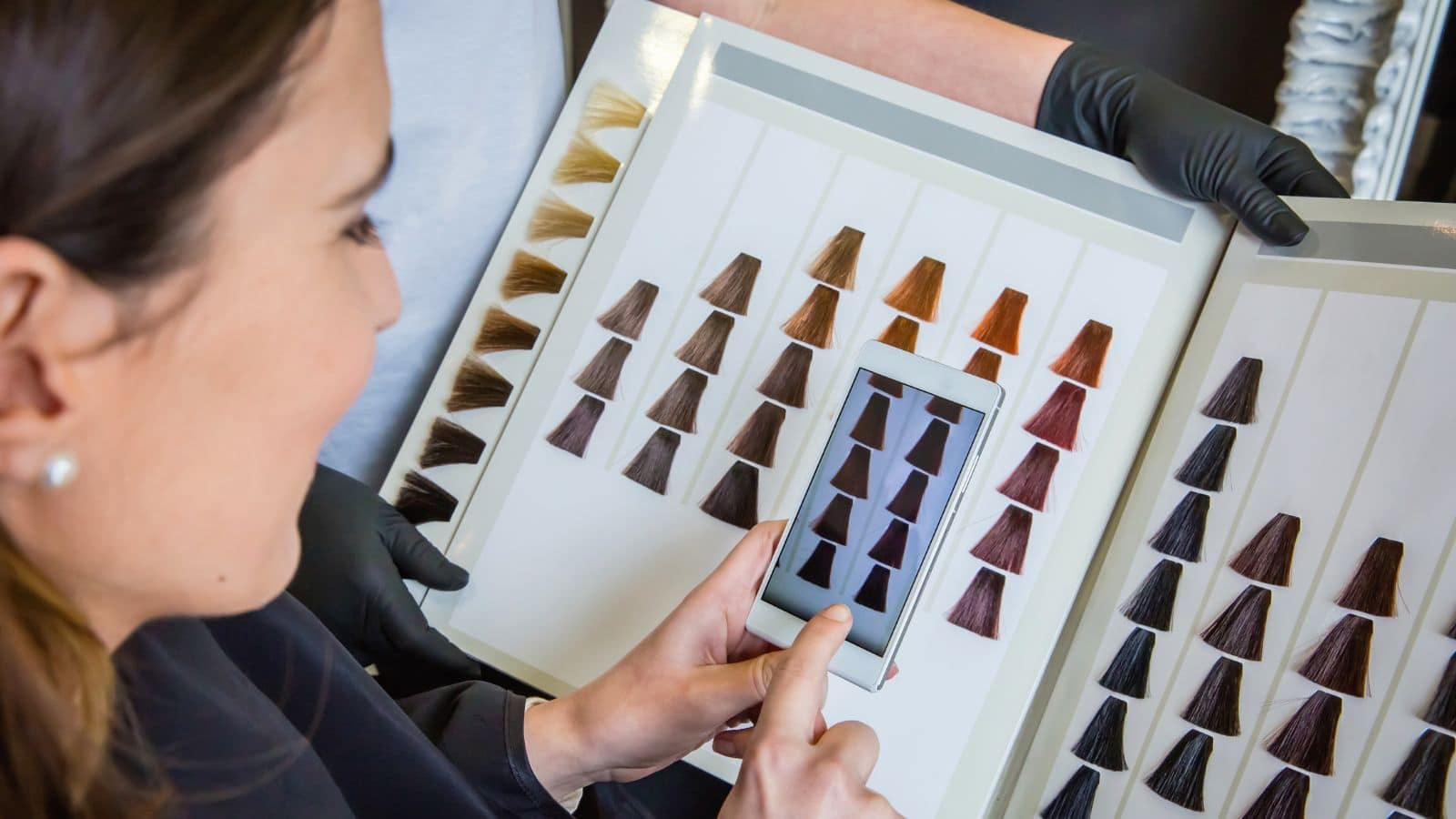
- Photos of the color you’re hoping to achieve
- Any box dye brands or at-home products you’ve used recently
- The date and details of your last salon service
- An honest account of any treatments you’ve tried since things went wrong
At Trademark Salon on Louetta Road, every service starts with a one-on-one talk with your stylist, and that’s especially true for corrective work. It’s how we know if you need a full color correction plan or just a simpler fix, and how we set realistic expectations before any color touches your hair. Clients near our Vintage Park area often come to us after a box dye attempt at home, and the pattern is usually the same: buildup that needs professional removal, not another coat of color. These consultations are also where we explain, honestly, how many sessions it may realistically take to reach your goal shade, and where we set expectations for how future color corrections may be needed as your hair grows out.
There’s no pressure to decide anything on the spot. Most people leave a consultation simply relieved to have a clear plan and a real answer instead of another guess.
Conclusion: Ready to Bring Your Color Back on Track?
You now know how color correction actually works, roughly what it costs, and how long it takes to do right. The one thing left to find out is specific to you: what your hair’s porosity, elasticity, and history mean for your particular fix, and that only shows up through an in-person strand test. There’s no need to keep guessing or dreading the next wash. Call (832) 717-3422 to book a consultation, and let a stylist tell you, honestly, what it will take to get your color back to where you love it.
FAQ
How long does hair color correction take?
Hair color correction can take anywhere from one session to several appointments spaced weeks apart, depending on how much damage or buildup needs fixing. Minor brassiness might clear up in one visit, while heavy box dye buildup or over-processed bleach often needs several sessions over a few weeks. Only an in-person strand test can tell you your real timeline.
How much does color correction cost at a salon?
Color correction cost depends on complexity and time, not a fixed rate, since every head of hair starts from a different place. Sessions that need multiple visits, bond-building treatments, or extra toning cost more than a single quick fix. A consultation is the only way to get an accurate quote for your color correction.
Can brassy or orange hair be fixed?
Brassy or orange hair can almost always be fixed using toning and color theory to cancel out the unwanted warmth. How bad the brassiness is affects how many sessions of color correction it takes to fully fix it. A professional assessment will confirm the best path for your specific hair type.
Is color correction bad for your hair?
Professional color correction isn’t bad for your hair when it’s done with bond-building treatments and proper spacing between sessions. The real damage usually comes from rushed, at-home, or repeated DIY hair coloring attempts, not from a professionally managed correction. Spacing sessions weeks apart protects your hair. It’s not a delay tactic.
How do you fix a box dye job gone wrong?
A box dye job gone wrong is usually fixed with professional color removal followed by careful toning, not another layer of dye. Repeated box dye applications are one of the most common causes of the muddy, uneven buildup clients bring to us for color correction. A proper diagnostic step has to happen before any correction work begins.
What’s the difference between color correction and a regular color service?
A regular color service starts from a known, predictable color. Color correction starts from an unknown or damaged place that needs diagnostics first. That’s why correction isn’t a single, standard service the way a routine hair coloring appointment is. Book a consultation to find out which one fits you.
Can my hair actually be fixed, or will I need a strand cut?
Most hair can be corrected safely with the right pacing and technique. But some badly damaged hair may need a strand cut or a slower, multi-month plan instead of one big session. How bad the damage is, plus porosity and elasticity, all factor into that decision. A strand test and elasticity check during your consultation is the only safe way to know for sure.